-
Allow women in: Reverse the decision to delay full equality in the GAAEvery person who has ever togged out for their club knows what the GAA is for. It's about belonging and pride in their community. But for too long, women and girls who have equally put their heart and soul into playing for their communities have been denied full equality. When we hear 'integration' of ladies football and camogie is being 'pushed out, slowed, or deferred', what rings in our ears is the GAA telling girls and women: your belonging can wait.3,835 of 4,000 SignaturesCreated by Siobhan O'Donoghue
-
Protect the 5-year citizenship pathway for people already living in IrelandNo evidence has been offered for the eight-year figure. The Department has not published research, has not conducted an impact assessment, and has not identified what problem in the current system this is meant to solve. Organisations working with migrant communities said so publicly within a day of the announcement. A three-year extension to the citizenship pathway of every lawful resident in the State is not a technical adjustment, and it has been proposed without a stated basis. Thousands of people came to Ireland lawfully, under rules the State set. Nurses and doctors keeping wards open, care workers, engineers, hospitality staff, researchers. They planned their lives — mortgages, children's schooling, career decisions — around a five-year pathway. Moving that line to eight years after they arrived changes the terms of an agreement they have already kept. The Department says the number of new citizens rose sharply. It did. But no eligibility rule was loosened in that period. What changed was processing speed: the Department's own figures show application processing times fell from 15 months in 2023 to 8 months in 2024 following digitisation. A backlog being cleared is not evidence that the rules are too generous. The Department also says this aligns Ireland with other EU states. Germany reduced its standard naturalisation requirement from eight years to five in 2024 — the OECD records that the stated aim was to raise citizenship uptake and make Germany more attractive to foreign talent. France requires five years, reduced to two for graduates of French universities. The EU Long-Term Residence Directive itself sets a five-year threshold. German law counts time spent in the country as a student in full; Ireland's Stamp 2 does not count at all. Eight years would place Ireland above Germany and France, not alongside them. Where research does exist, it points the other way. The OECD's own study of naturalisation found a clear positive effect of citizenship on labour market integration, particularly on access to higher-skilled and better-paid work. When Canada extended its residence requirement by a single year, one study found wages among naturalised men fell by 11%. The Department has produced no comparable analysis of what three additional years would cost. Meanwhile, the fastest-growing route to Irish citizenship is untouched by this Bill. Applications to the Foreign Births Register from US residents rose from 11,601 in 2024 to 18,910 in 2025 — a 63% increase in a single year, the highest since digital records began. That route carries no residence requirement whatsoever. If rising numbers are the problem, this Bill does not address them. It addresses only the people who are already here, working and paying tax. We are not asking the Government to abandon reform. We are asking it not to apply new rules retrospectively to people who have already spent years meeting the old ones.5,526 of 6,000 SignaturesCreated by Rachel Zhou
-
 End Cisco's complicity in GazaCisco prides its company on its "vibrancy and modernity." But that same modernity is being used to destroy lives, homes, and hope. The people of Ireland reject this contradiction. Technology must not serve as a weapon of war and we must not be a silent witness to complicity. We call on every person in Ireland— whether in Galway, Dublin, Cork, or beyond — to reflect on your relationship with this tech giant and to join this call for accountability. Cisco's Role in the Gaza War: The Evidence While Ireland benefits from Cisco's presence in our country — its offices, its jobs, its reputation as a modern tech employer — this same company is providing critical technological infrastructure to a military campaign that the International Court of Justice has deemed a "plausible case of genocide." Cisco is a key technology provider to the Israeli military, supplying server infrastructure, data centre services, and networking systems that directly support Israel's military operations in Gaza. Specifically: • Cisco provides cybersecurity systems, cloud computing, big data analytics, AI technologies, and high-speed military communications networks to the Israeli Ministry of Defence • Beneficiaries include the Israeli Air Force, Navy, Military Intelligence Directorate (Aman), the Prime Minister's Office (overseeing Mossad and Shin Bet), the Israeli Police, and the Prison Service — as well as defence contractors such as Elbit Systems • Cisco's infrastructure is reportedly used to support AI-powered targeting systems — the same systems that were tested as early as 2021 and are now being deployed at scale in Gaza to identify targets, often with devastating civilian consequences Cisco Systems, with its large workforce across Ireland, is not a passive observer. It is an active enabler. Internal Dissent and Suppression Employees who have raised ethical concerns have been systematically silenced: • 25 March 2025: Cisco issued a company-wide policy restricting internal discussion of the Middle East conflict • On the same day, an employee was fired for publicly protesting the use of Cisco technology in the killing of Palestinians • The company subsequently deleted its largest pro-Palestinian WebEx chat room, "Bridge to Humanity (B2H)", along with its associated educational website Cisco's CEO has publicly claimed the company is "committed to humanitarian efforts" and supports "both Israeli and Palestinian communities." Yet the suppression of internal dissent and the dismissal of a concerned employee paint a very different picture. The Broader Context: Technology as a Weapon of War Recent events have exposed the dangerous entanglement of Western tech with military operations. In April 2026, large numbers of Cisco routers and firewalls across Iran reportedly failed en masse just before US-Israeli airstrikes, disrupting radar systems and command links. These devices are suspected of containing remote kill-switches that can be activated via satellite or timer — a chilling demonstration that Cisco's hardware can be weaponised, and that Israel is a deeply integrated partner in that capability. "True security begins with owning and producing your own technology." A warning from Iranian cybersecurity experts, but a lesson for every nation that values peace, justice, and human dignity. Ireland's Moral Stance As a neutral nation with a proud tradition of anti-war activism and solidarity with the Palestinian people, Ireland cannot afford to turn a blind eye. Irish people have: • A strong anti-militarist tradition • A long history of supporting Palestinian rights • A growing awareness of corporate social responsibility and ethical consumerism As people who live in Ireland, we have a moral duty to examine the connection between Cisco's presence in our communities and its role in the destruction of Gaza. Cisco in Ireland must now become a company of questioning and accountability, not silent complicity.63 of 100 SignaturesCreated by Galway Alliance Against War
-
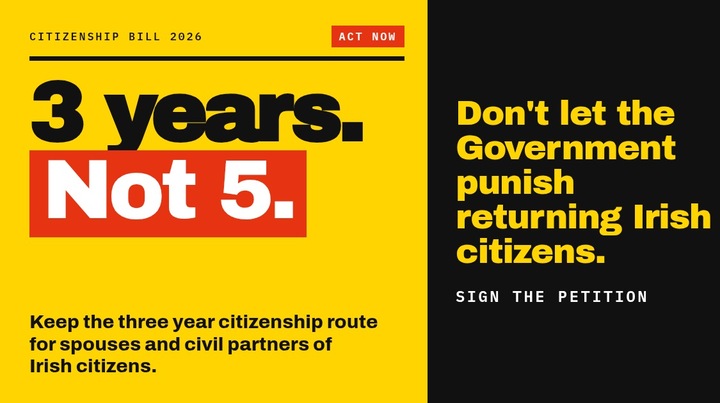 Keep the 3 year citizenship route for spouses of Irish citizensThe draft Irish Nationality and Citizenship (Amendment) Bill 2026 proposes to raise the qualifying period for spouses of Irish citizens from three years to five. It would require five years of marriage and five years of residence in the State, including two years of continuous residence immediately before applying. The shorter period for spouses of Irish citizens is not a loophole. It exists because an Irish citizen building a family with a foreign spouse has a special stake in the future of this country. That distinction has been recognised in Irish law for decades and no case has been made publicly for removing it now. This change falls hardest on a specific group. A very large number of people left Ireland over the past decade because they could not afford to live here. Rents were beyond reach and buying was not an option. Many of us met and married our partners abroad. Some of us are now coming home, in many cases into Healthcare and Construction jobs the State says it needs to fill. Adding years to how long it takes our spouses to settle is a further cost imposed on people who already carried the cost of that failure once. For many of us the plan was to start a family once our spouse's status was settled rather than while it still depended on annual renewals. Adding two years to that wait moves a decision that cannot always be moved, particularly for couples already in their thirties. Irish Citizens who made irreversible decisions based on published law should not be caught by a change made after the fact. We are asking Minister O'Callaghan to retain the three year period for spouses of Irish citizens. The Bill has been referred to the Oireachtas Justice Committee for scrutiny, which means the text is not final. There is still time to change it.604 of 800 SignaturesCreated by John Devanney
 -
Stop the Fare Increases — Make Public Transport Free, Frequent and Accessible to AllPublic transport fares should not be going up in the middle of a cost-of-living crisis. People are already paying too much for housing, food, energy and other essentials. Getting to work, college, school or medical appointments should not mean even more financial pressure. Recent fuel price shocks have also shown how vulnerable we are in an increasingly unstable world. Climate breakdown is accelerating, wars can disrupt energy supplies, and international crises can quickly push up the cost of petrol and diesel. We need to think seriously about long-term resilience, and that means giving people a public transport system they can actually rely on, no matter where they live in Ireland. Free, frequent and reliable public transport would cut household costs, reduce our dependence on fossil fuels, lower emissions and improve quality of life. It would mean less time stuck in traffic, less money spent getting around, and more freedom for people without having to depend on a car and the expenses cars bring.429 of 500 SignaturesCreated by Conor Reddy
-
 Don't block people from visiting Molana Abbey & graveyard at Ballynatray Estate, Co WaterfordThere is a deep connection with Templemichael Castle, the graveyard and Molana Abbey for local communities and visitors to the area. The idea that these treasured sites will be blocked off is appaling and will fuel resentment towards the owners of large estates like Ballynatray Estate.193 of 200 SignaturesCreated by MyUplift
 -
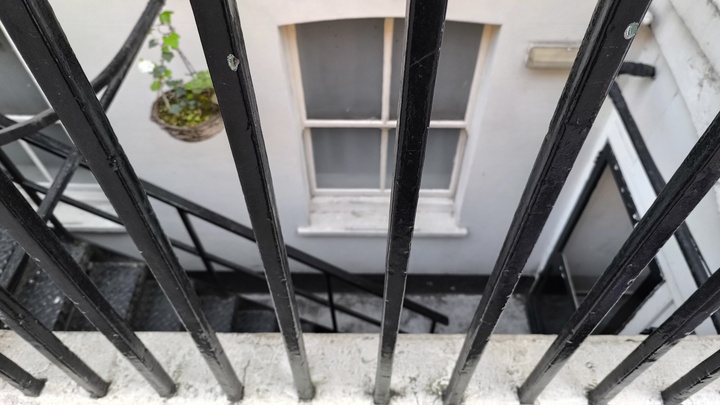 Time for a truthful account of the death of Celia de Jesus!On 24th October 2011, Irish citizen and hospice worker Celia de Jesus lost her life during a major flood event in Dublin. Unable to exit her basement flat as floodwater quickly rose at her door, she was trapped and drowned. In his report, the Dublin District Coroner of the time argue that Celia de Jesus drowned “as a result of a surge of water and flooding over a short period of time following two days of heavy rain”, reaching a final verdict of “death by misadventure”. However, extensive research into the tragic event reveals that the coroner report omits several pieces of evidence clearly challenging the conclusion of the report. Two of the main pieces of evidence left out of the report are as follows: • EVIDENCE 1: Celia de Jesus’s landlord had not received planning permission to divide the basement of his property into two rental units. Celia de Jesus was therefore renting an unauthorised basement flat. Furthermore, while located in a well-known flood-prone area, the basement flat had only one means of exit, the entrance door. All windows of the flat were blocked with metal bars. When Celia de Jesus was unable to open her entrance door for unknown reasons, she had no other means of exit at her disposal and was trapped. These pieces of evidence are never explicitly mentioned in the report and never outlined as a major cause of the tragic death. Instead, the claim is made that the works to divide the basement into two rental units (“appear to”) precede the Building Control Act 1990 and that, as a result, they shall be deemed to have been permitted. However, such a legal technicality cannot justify entertaining a misleading account of the tragic death. • EVIDENCE 2: In the coroner report, a list of planning applications submitted for the property in which Celia de Jesus died, both granted and refused, is provided. However, one planning application, dated 2009 and refused, is not included in the list. In this planning application addressed to Dublin City Council, it is stated that the property in which Celia de Jesus lived and died is “not of a habitable standard” (architect report, planning application 3066/09). Despite such a concerning statement, the issue failed to be addressed, which constituted another significant enabler of the tragic event. Following the tragic event and until now, various state and local government agencies, among them Dublin City Council, South Dublin County Council and the Office of Public Works, have actively sustained the misleading account of Celia de Jesus’s death in reports and during public meetings. Instead of mentioning the planning breach and institutional failure that led to the tragic death, they consistently and unliterally blamed the flood. The misleading account was widely relayed in the local and national press and among local communities. As we are now approaching the fifteenth anniversary of the tragic death, we ask Dublin City Council, South Dublin County Council, the Office of Public Works and the Minister for Justice to take the following actions as a matter of urgency: • ACTION 1: Issue a public statement explaining the full circumstances of the death of Celia de Jesus based on all available evidence • ACTION 2: Issue a public apology for having sustained a misleading account of the tragic death • ACTION 3: Request an immediate review of the coroner report and of its final verdict Please sign the petition to support these demands and share as widely as you can thank you!103 of 200 SignaturesCreated by Laure De Tymowski
 -
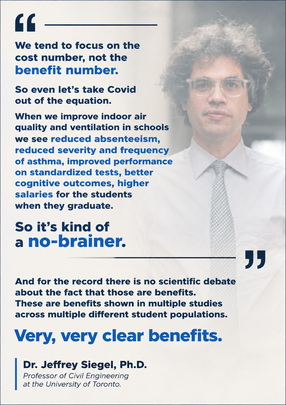 Protect Our Children: Clean Indoor Air and the Truth About Long COVIDChildren spend a huge proportion of their lives in classrooms. They should not have to breathe poorly ventilated, unfiltered, rebreathed air for six hours a day when practical solutions exist. COVID has not disappeared. Reinfections continue, and a proportion of children and adults (16% according HSE FADA report, 15-53% according to HIQA's review of international evidence, 16% according to Mass General Brigham study, 2026, 27% of healthcare workers according to NHS REACH-OUT study, 2026) develop Long COVID — sometimes with disabling symptoms. Due to the lack of information on long Covid in Ireland, much of this harm is going undiagnosed or is not attributed to the real cause, COVID-19 infection. The WHO, the CDC, the OECD and other international organizations continue to warn about Long COVID, including its impact on children, yet public awareness in Ireland remains remarkably low. Clean indoor air is one of the few interventions that can protect everyone without requiring individual behaviour. Good ventilation and appropriately sized HEPA filtration reduce exposure to airborne infectious particles while also helping to reduce pollutants, allergens and particulate matter. Other places are already acting. Schools in London, parts of the United States, Canada, Australia and elsewhere have introduced filtration, air-quality monitoring or wider clean-air programmes. Ireland announced €62 million for school ventilation improvements and HEPA filtration in December 2021, yet HEPA filtration is still not standard in Irish classrooms. This is also about the right to honest public-health information. Parents should be given clear, current information about airborne transmission, Long COVID, women and girls being at greater risk of Long COVID, reinfection and the potential longer-term consequences of infection so that they can make informed decisions for their families. The information vacuum on the reality of Long COVID and the huge burden it puts on the healthcare system is being filled by racist, antivax conspiracy theorists. Clean Indoor Air will save lives and improve the health and wellbeing of children today and for generations to come. The infrastructure we put in place now will protect pupils and teachers from COVID, influenza and many other airborne infections, while improving the everyday quality of the air they breathe. Ireland entered the pandemic with the 4th highest rate of asthma in the world with 1 in 5 children suffering and as an outlier in the EU with rising deaths from asthma. It is an abomination that the government decided against making HEPA filters standard in classrooms when faced with COVID-19, and we feel it is an insult to our intelligence and an exercise in gaslighting when politicians and media discuss issues such as "alarming rates of absenteeism" and "record breaking hospital overcrowding", while completely ignoring the reality of long COVID. We know how to make indoor air cleaner. We know how to reduce airborne transmission. Parents deserve accurate information about the risks. What is missing is the political will to act. Please join us in asking the Government to make clean air and honest public-health information a basic standard for every child in Ireland.31 of 100 SignaturesCreated by Parents For Clean Air —
-
Recreational Sports HubEverybody will benefit from such a facility in keeping active and fit. A 400- metre athletics track are universal. If we want to see future athlete's competing at major sporting events creating a space where people can train in safe and secure manner is critically important.1 of 100 SignaturesCreated by Gino Kenny
-
.png) Stop Meta, TikTok & YouTube Profiting From Videos of Wrong-Way Crashes on Irish RoadsEvery time a video of a car driving the wrong way, or a crash caused by it, goes viral, more lives are put in danger and more families are destroyed. Social media bosses make millions from pushing this content into the feeds of people who then watch and share it. We deserve an internet that keeps us safe - not one that puts us in danger. Patrick O'Donovan is the person who is in charge of reining in big tech bosses. He needs to do his job, not pander to them, while putting the responsiblity back on the sholders of parents, schools, communities.1,437 of 2,000 Signatures
Stop Meta, TikTok & YouTube Profiting From Videos of Wrong-Way Crashes on Irish RoadsEvery time a video of a car driving the wrong way, or a crash caused by it, goes viral, more lives are put in danger and more families are destroyed. Social media bosses make millions from pushing this content into the feeds of people who then watch and share it. We deserve an internet that keeps us safe - not one that puts us in danger. Patrick O'Donovan is the person who is in charge of reining in big tech bosses. He needs to do his job, not pander to them, while putting the responsiblity back on the sholders of parents, schools, communities.1,437 of 2,000 Signatures -
 Object to another Starbucks in GalwayGalway's traffic is bad enough. Adding another drive-thru at one of the worst junctions in Galway City for traffic will only make things worse.2,611 of 3,000 SignaturesCreated by Galway Commuter Coalition
-
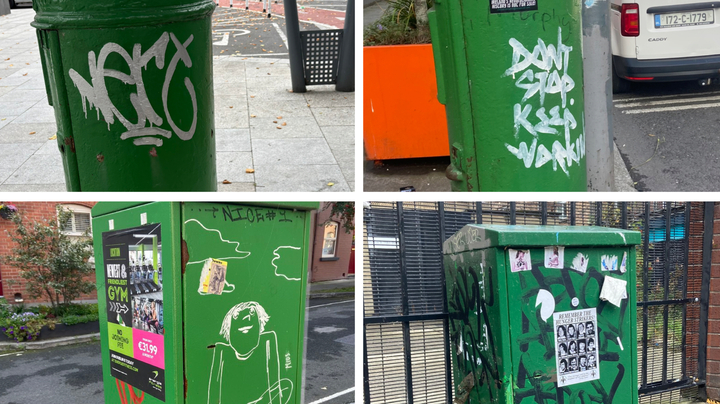 Improving the Maintenance of An Post Street Furniture in Dublin 8Some An Post infrastructure across Dublin 8 would benefit from additional maintenance. Graffiti, rust, moss, stickers, peeling paint and general dirt can detract from the appearance of streets and public spaces. Local residents and volunteers work hard to keep Dublin 8 clean and well cared for. We believe that maintaining An Post’s own street furniture is an important part of this wider effort. We are asking An Post to: • Remove graffiti, stickers, moss and accumulated dirt. • Treat rust and repair damaged areas. • Repaint post boxes and other street furniture where necessary. • Repair or replace items that are significantly damaged. • Carry out regular checks of its street furniture. • Respond promptly to graffiti and damage. • Engage constructively with local residents and community groups in identifying locations that require attention. Well-maintained street furniture contributes positively to the appearance and character of neighbourhoods and helps create clean, welcoming public spaces. We are asking Mr Kieran Mulvey, Chairman of An Post, to consider a programme of cleaning and maintenance for An Post street furniture across Dublin 8. We hope An Post will support this initiative and help ensure that its street furniture is maintained to a good standard for residents, visitors and the wider community.8 of 100 SignaturesCreated by Zoe Obeimhen
Hello! We use cookies to save you time and show you more relevant campaigns. Need more information?