-
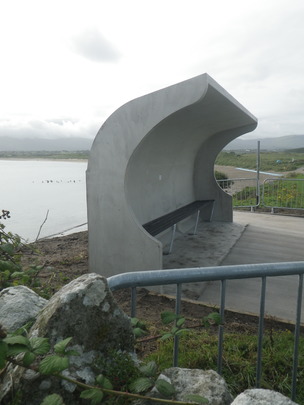 Design and Location of the Mullaghmore "Accessible Swimming Shelter”We need your support to insure that the much needed, accessible public swimming facility in Mullaghmore is: • Functional • Respects both the environment in which it is located • Respects the rights of citizens to be actively and meaningfully involved in decision making at every stage of the planning process This structure has been described as a “wheelchair accessible swim shelter” by Sligo County Council; however, many people, including potential users of this facility, have identified several issues, and they are: 1. Functionality of the structure: (a) Facing into the prevailing west and south-west winds and rain, on high ground and thus cannot provide any significant shelter (b) Exposing swimmers, including women and children, to the gaze of passers-by on the main beach path, as they undress to go swimming. This will be exacerbated if the outdoor shower is installed. (c) Cannot be accessed or used by wheelchair users (d) Is not at a convenient distance to the shore for users (e) The seating area cannot be seen from the beach or shore, to monitor the safety of any personal possessions that might be left there (f) It is facing away from the view of the sea 2. Environmental Impact: The site on which this structure has been located is in close proximity to a Special Area of Conservation(SAC*). Mullaghmore beach is part of that SAC. Therefore, a publicly accessible, appropriate environmental assessment of the site, should have been produced before this structure was installed. *An SAC designation identifies a Special Area of Conservation, which is a protected natural site designated to safeguard rare, threatened, or vulnerable habitats and species of European importance. It has a legal basis because it was established under the European Union's Habitats Directive and is part of Natura 2000, a vast continent-wide network of protected nature sites. Damage has already been caused to the vegetation and the low cliff edge of the SAC, to the rear of the shelter, due to animals creating a shortcut to access the structure to use it as a scratching post (photographic and video evidence is available). Inevitably, the low cliff edge will erode further due to human and animal traffic on this new route and the impact of the elements on the cliff face. This will be exacerbated due to runoff if the outdoor shower is installed. Several more similar structures are planned to be installed around the coast of Ireland in association with Swim Ireland. Of the 5 structures already installed, the one on Portnablagh Pier, Co. Donegal, has recently fallen over. 3. Democracy: Almost no member of the local community, the potential users of this swim shelter, including local swimmers, visitors, local businesses or others with a genuine interest and/or concern for the development of this community, village and region, were consulted in a meaningful way about the planning, designing or implementation of this structure in this area. This structure is a public amenity and is not an exempted development; therefore, appropriate environmental assessment and meaningful public consultation should have taken place before the tender documents were signed for its construction and installation. Thousands of taxpayers' money has already been spent on this structure. The cost of the structure, with the proposed shower, is likely to be €12,500. According to the Government-issued Local Democracy Reforms policy, local authorities such as Sligo Co. Council should be engaging in “meaningful public consultation” so that those bodies “move away from mere ‘box-ticking’ toward genuine, early, and transparent community engagement”. A core standard for Meaningful Engagement is early Involvement: Local authorities are encouraged to “engage communities before project designs or policy paths are finalised, allowing public feedback to genuinely shape local plans”. 4 Aesthetics: The current location of the structure is visible from the scenic route and picnic benches as it is positioned on the skyline, interrupting views of the sea, sky and landscape. This area is classified as a ”sensitive rural landscape ….. with a low capacity to absorb new development” according to the Sligo Co. Development Plan.243 of 300 SignaturesCreated by Martina Butler
 -
 Petition to Make Neurodivergent Assessments Accessible for Adults Through the HSEA letter to Minister Mary Butler, to the HSE, to the government, and to whomever may listen. I hope your day is going well. If you have a few moments to read this letter, I would be extremely grateful for your time. Autism, ADHD, Spectrum Disorder, Sensory Disorder. These are all words that I’m sure you’ve heard before. Many of times, if these words are said we think of a young boy who struggles to sit still in class, or has to wear ear defenders to get through the fireworks on Halloween. Maybe at a push, it may be the young girl who has a special interest in horses, or has to bring her fidget toy to school with her. However, what if I were to tell you that neurodivergence is much more than that, and it doesn’t stop when you reach a certain age. What if I told you that Mia, aged 19 is being bullied in her PLC because she dared to express her special interest in a kids cartoon? Or that Aoife, aged 26 is constantly called lazy and doesn’t know why she can’t just get out of bed and complete a task? Or that Michael, aged 30 has failed to carry out 6 attempts at a college education, because the campus is too loud and there was no where for him to go to decompress, so he just decides not to go in at all? Many individuals aged 18 and upwards have lived entire lives trying to survive in a world that wasn’t built for them. I can speak from direct experience when I say that these individuals face invisible challenges every day such as executive disfunction, time keeping, distraction, troubles around socialising, finding self esteem and experiencing invisible torture when it comes to navigating the world through sound, sight, smell, taste and touch. I could go on and on forever, and yet not nearly enough people are given support for these issues. The biggest question around lately has been “Why is there such a mental health epidemic in this country as of late?” and my answer to you is support. I would like to explain why I believe that the lack of support for individuals over the age of 18 with neurodivergent symptoms of traits could be one of the major reasons for this epidemic. Individuals 18 years or older (predominantly women) with possible Neurodivergence are turned away from Primary Care centres, Community Mental Health centres and Psychiatric Assessment wards and clinics all because of their age. This is a ridiculous and outdated practice, as neurodivergence doesn’t end once an individual has turned 18 years of age. For many people, women especially, neurodivergence is already under diagnosed or recognised in places like CAMHS because of the ignorance around the typical symptoms of neurodivergent disorders in girls and women. I would like to point out that this is a spectrum, many people mask and are left feeling inadequate, alone and isolated and later down the line told that they instead have psychiatric mood disorders such as BPD. This is so that the doctors in positions of power can fob them off and take lunch early. If neurodivergence was supported properly in this country, the knock on effect of issues such as Anxiety disorder, OCD, mental burnout and Depression etc. would decrease, as the root of the problem would be investigated, instead of the symptoms resulting from it. This is such a major issue and if we pull together to get it sorted, adult individuals living with neurodivergence could finally find peace of mind and support that they’ve always needed in their workplaces, education and communities. If you want real change in the mental health of individuals across Ireland, listen to their concerns!!! This is not a petition to continue labelling people. This is not a cry for attention This is a cry for support and help for those who deserve real assessment, real validation in their experience and real support without having to find €2000-€3000 just to be told something they already know. Thank you for your time and if you agree with this letter, please sign the petition. Something has to change. Kind Regards, Sienna Reynolds A Social Care Practice Student with real life experience wanting to make a difference.83 of 100 SignaturesCreated by Sienna Reynolds
 -
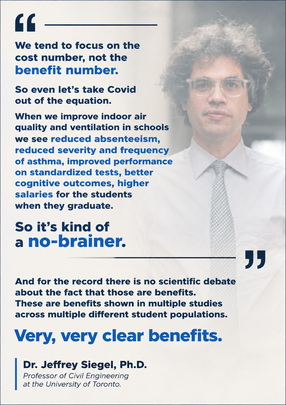 Protect Our Children: Clean Indoor Air and the Truth About Long COVIDChildren spend a huge proportion of their lives in classrooms. They should not have to breathe poorly ventilated, unfiltered, rebreathed air for six hours a day when practical solutions exist. COVID has not disappeared. Reinfections continue, and a proportion of children and adults (16% according HSE FADA report, 15-53% according to HIQA's review of international evidence, 16% according to Mass General Brigham study, 2026, 27% of healthcare workers according to NHS REACH-OUT study, 2026) develop Long COVID — sometimes with disabling symptoms. Due to the lack of information on long Covid in Ireland, much of this harm is going undiagnosed or is not attributed to the real cause, COVID-19 infection. The WHO, the CDC, the OECD and other international organizations continue to warn about Long COVID, including its impact on children, yet public awareness in Ireland remains remarkably low. Clean indoor air is one of the few interventions that can protect everyone without requiring individual behaviour. Good ventilation and appropriately sized HEPA filtration reduce exposure to airborne infectious particles while also helping to reduce pollutants, allergens and particulate matter. Other places are already acting. Schools in London, parts of the United States, Canada, Australia and elsewhere have introduced filtration, air-quality monitoring or wider clean-air programmes. Ireland announced €62 million for school ventilation improvements and HEPA filtration in December 2021, yet HEPA filtration is still not standard in Irish classrooms. This is also about the right to honest public-health information. Parents should be given clear, current information about airborne transmission, Long COVID, women and girls being at greater risk of Long COVID, reinfection and the potential longer-term consequences of infection so that they can make informed decisions for their families. The information vacuum on the reality of Long COVID and the huge burden it puts on the healthcare system is being filled by racist, antivax conspiracy theorists. Clean Indoor Air will save lives and improve the health and wellbeing of children today and for generations to come. The infrastructure we put in place now will protect pupils and teachers from COVID, influenza and many other airborne infections, while improving the everyday quality of the air they breathe. Ireland entered the pandemic with the 4th highest rate of asthma in the world with 1 in 5 children suffering and as an outlier in the EU with rising deaths from asthma. It is an abomination that the government decided against making HEPA filters standard in classrooms when faced with COVID-19, and we feel it is an insult to our intelligence and an exercise in gaslighting when politicians and media discuss issues such as "alarming rates of absenteeism" and "record breaking hospital overcrowding", while completely ignoring the reality of long COVID. We know how to make indoor air cleaner. We know how to reduce airborne transmission. Parents deserve accurate information about the risks. What is missing is the political will to act. Please join us in asking the Government to make clean air and honest public-health information a basic standard for every child in Ireland.31 of 100 SignaturesCreated by Parents For Clean Air —
-
New skatepark tullamore offalyOther people should join me in this campaigne because there has been many issues lately with the tullamore skate scene as the park is an unsafe place and the skatepark no longer feels like a fun place to learn to skate there is many skaters in tullamore and only one skatepark is no longer enough134 of 200 SignaturesCreated by Jack pidgeon
-
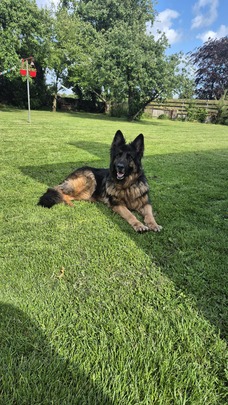 Allow German Shepherds to be therapy/service dogs for people with special needsGerman Shepherd dogs are known for their fantastic abilities as service dogs. They combine intelligence, trainability, physical capability and very strong bonds with their handlers. They are the most loyal dog breed. They have physical strenght to provide balance support, pulling wheelchairs, opening doors, retrieving dropped objects. German Shepherds has proved themselves as guide dogs for people with visual impairments, as medical alert and psychiatric service dogs.They are confident under pressure. Yes, they require proper training but so as any other service dog. On a personal note....Kurtin,beautiful, loyal and absolutely outstanding non official (unfortunately and very unfairly) therapy dog has been by my special needs son's side for nearly 12 years.41 of 100 SignaturesCreated by Valentina Vilkele
 -
Make Carlow wheelchair friendlyEven people with limited mobility need to be able to get around!4 of 100 SignaturesCreated by Melissa Wallace
-
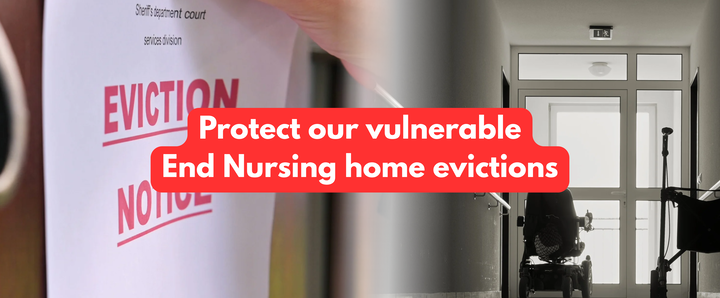 Protect our vulnerable, end evictions from Private nursing homesA recent Journal investigates report has highlighted a major issue in relation to private nursing homes here in Ireland. Families being threatened with evictions of their loved ones for simply raising concerns relating to the care of their loved one. With over 80% of nursing homes in Ireland now being privately owned and operated the government need to step in and protect the most vulnerable people within our society. These private nursing homes are paid public money through the so called "Fair Deal" scheme and the provide a public service in terms of long term care. The report highlighted how families who raised concerns over the level of care provided to their loved one, were then threatened with eviction. This leads to an imbalance of power, where the nursing home has control over a persons place within the system. That imbalance of power needs to be corrected and it needs to be done now. We the undersigned and now calling on Minister of state for older people, to take immediate action to end the cruel practice and to strengthen all laws that protect vulnerable people within private nursing homes.115 of 200 SignaturesCreated by Ross McGann
 -
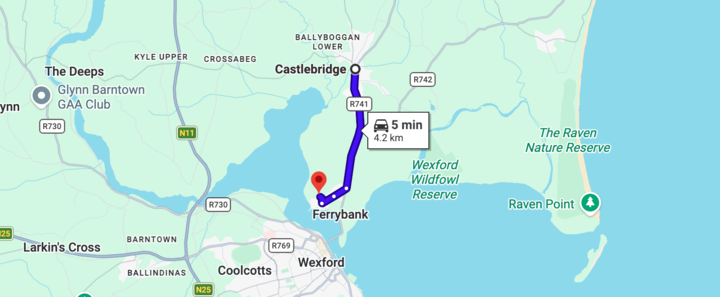 Make the R741 safe and fit for purposeThe Road R741 from Crosstown to Castlebridge is unsafe and unfit for its purpose. 12000+ cars use this stretch of road every day, a ten fold increase over the last 2 decades. Over the years, there have been fatalities and recently many near misses with pedestrians and cyclists - some instances where they have been knocked over. Elderly people, parents with children and disabled people using mobility scooters are forced directly onto the road where public footpaths end abruptly and verges are unsafe. The roads unsuitable resurfacing and lack of infrastructure and drainage has meant the verge is now at a sharp angle, where you can no longer safely walk. The danger is increased in wet weather. From Crosstown service station to Castlebridge, the speed limit increases from 60 to 80 km/h, while public footpaths and cycle lanes suddenly end. Unsafe verges mean pedestrians are forced directly onto the roads surface. Houses along the road are in dips as a result of careless resurfacing - where the road is now bowed - causing flooding with damages of over €30,000. This applies to a stretch of road just 1.2 miles long where cycle lanes and public footpaths end in abruptly in Crosstown and begin again in Castlebridge - how are pedestrians and cyclists supposed to travel safely without these measures?133 of 200 SignaturesCreated by Richard Malone
 -
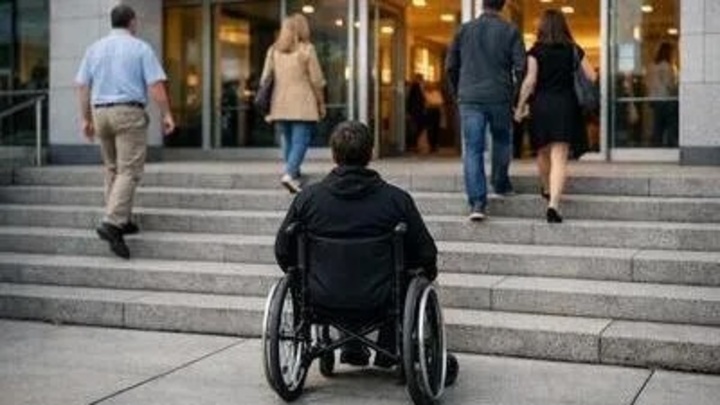 Close the Loopholes: Make Accessibility a Right, Not a FavourAcross Ireland, people with disabilities are still being shut out of buildings and services that are open and working for everyone else. They are told “we can’t afford it,” “the building is too old,” or “we can’t let you upstairs.” But the real problem is not just bricks and mortar. It is a legal and policy system that still allows too many businesses and public bodies to delay, deflect, and do too little. Ireland has equality and human-rights obligations in this area, including under the UN Convention on the Rights of Persons with Disabilities. As a lifelong wheelchair user for over 30 years, I have witnessed firsthand the discriminatory practices of both businesses and government bodies when it comes to making the built environment wheelchair accessible. Despite Ireland’s domestic and European equality and accessibility obligations, these bodies still exploit loopholes in the law — particularly phrases like “nominal cost” and “as far as practicable” — to sidestep real action. The result is persistent accessibility barriers that have a profound negative impact on people with disabilities, denying equal access to public spaces, workplaces, and essential services. Accessibility is not a special request. It is part of the equality and human-rights standards Ireland already claims to uphold. Yet in practice, the law still leaves major gaps. In employment, there is a stronger reasonable-accommodation / disproportionate-burden framework. In goods and services, providers can still rely on the “nominal cost” limit in the Equal Status Acts. And on the public side, the Disability Act still uses the phrase “as far as practicable” for public buildings, which has too often allowed delay instead of delivery. The system is also too fragmented. Most equality complaints go through the Workplace Relations Commission, but licensed-premises and registered-club cases follow a different route. That means the burden still falls too often on people with disabilities themselves to fight exclusion one complaint at a time. And this issue is not only about customers or service users. Inaccessible buildings can also lock people with disabilities out of recruitment, work, training, and career progression. Employers already have legal duties in this area, including around adapting premises, but access should not depend on luck, goodwill, or the willingness of one person to fight alone. That is not good enough. We are calling on the Irish Government and local authorities to close the loopholes and treat accessibility as a non-negotiable standard in every business, public service, workplace, and public-facing building. We are asking for: 1. Close the loopholes in both private and public access law Amend the Equal Status Acts so that access cannot be avoided by relying on “nominal cost” where meaningful accommodation is reasonably achievable. Amend the public-buildings regime so that “as far as practicable” can no longer function as a blanket excuse for delay. 2. Make access a condition of public funding, public investment, and public approval Any publicly funded refurbishment, retrofit, or new build should have to meet strong accessibility standards as a condition of approval and funding. Public bodies should be required to publish time-bound accessibility plans for their buildings and services. 3. End segregation disguised as accommodation Sending a person with disabilities to a separate room, separate entrance, or separate service point while everyone else uses the main service is not equal access. If a business or public service is open to the public, it must be open in practice to people with disabilities too. 4. Cover workplaces as well as public-facing premises Accessibility reform must apply not only to customers and service users, but also to workers, job applicants, trainees, and volunteers. No one should be excluded from employment because a building has not been made accessible. 5. Stop landlords from being the next excuse Where a business or service provider wants to make access improvements, landlords and property owners should not be allowed to block reasonable accessibility works and then leave tenants to carry the blame. 6. Shift the burden from individuals to the system Introduce routine accessibility audits, public reporting, a public register of inaccessible State buildings, funded retrofit deadlines, and real accountability, so access does not depend on isolated complaints after the damage is already done. Accessibility is not charity. It is not a luxury. If a building or service can operate for the public, it should be able to operate for people with disabilities too. Sign if you believe accessibility should be the law in practice, not just the promise on paper.11 of 100 SignaturesCreated by Garrett Kelly
 -
 Suitable Emergency Accommodation for the NeurodiversePlease sign my petition and support me in gaining suitable emergency accommodation supports from Donegal County Council.107 of 200 SignaturesCreated by Selina O'Donnell
 -
Keep Pathfinder Workers in the CommunityPathfinder is a collaborative HSE initiative between St Luke’s General Hospital Carlow/Kilkenny and the National Ambulance Service. It is an essential front line service that centres care around the elderly in Carlow and Kilkenny. - It supports to the most vulnerable in our communities to help them avoid a hospital stay. In 2024 they supported 300 patients and that number has been steadily increasing. They have knocked on the doors of hundreds of vulnerable people and allowed them to get the care and support they need in the comfort of their own homes. There is a wealth of data that shows hospital stays can increase the risk of catching deathly bugs or viruses. It can also increase the risk of medication errors, falls, immobility and many more instances that can increase mortality. Prevention is better than cure - - Ultimately, where it is safe and possible to avoid a hospital stay, it can be better for a person's health, particularly someone who may already have an underlying health issue. - It also means someone does not have to go through the logistical stress of a hospital stay which makes life easier for them and often, for the people and families who care for them. Yet shockingly, over Christmas, the Management of St. Luke's decided to remove this essential lifeline and re-deploy these workers. - Despite multiple attempts they have not provided any data to suggest this move is the best use of resources or is in the best interest of vulnerable people. The management say this is a "temporary" re-deployment but the manner in which they have callously cut Pathfinders does not inspire confidence, nor have they published any data that explores the ramifications that even a "temporary" closure will have on people. To date there has been a serious lack of transparency and oversight. This petition calls on the HSE and the management of St. Luke's to reverse their decision and keep Pathfinder Workers in the community. There is no evidence to suggest that re-deploying these workers into St. Luke's will result in more early supported discharges. We need funding to enhance more essential services and ESD - Not cuts to established essential services. It is possible that the removal of this service in Carlow and Kilkenny could be the start of a Nationwide move to cut this frontline service.310 of 400 SignaturesCreated by Adrienne Wallace
-
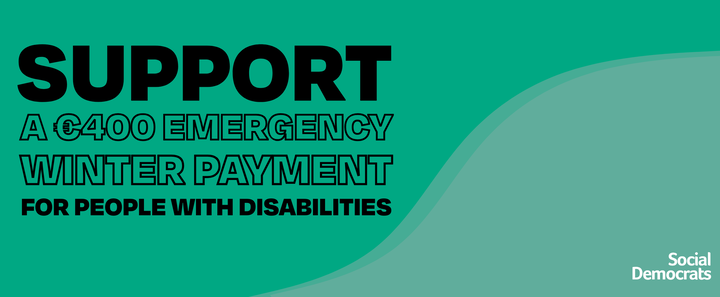 Support a €400 emergency winter payment for disabled peopleMore than 1 in 5 people in Ireland report having a disability or disabling condition or difficulty, and most people will experience some form of disability at some point in their lives. Disabled people face some of the greatest barriers to full participation in Irish society. They are at significantly greater risk than non-disabled people of experiencing poverty, social exclusion, and unemployment, as well as barriers in transport, housing, education, and other areas. For example, 2 in 5 people with a disability are unable to afford essentials like heating or new clothes, more than double the national average. 1 in 5 people with a disability live in consistent poverty, nearly four times the national average. Ireland also has one of the widest disability employment gaps in the OECD: less than a third of people with disabilities in Ireland are in employment, compared to an EU average of just over half. People with disabilities face a higher cost of living. In the context of rapidly escalating costs in energy, food, and housing, disabled people are particularly vulnerable to cost pressures, especially as they are more likely to spend more of their time at home. The need for a cost of disability payment was identified as far back as 2004. That principle was reaffirmed in the State-commissioned Indecon report, published in 2021. The 2025 Programme for Government committed to the introduction of a permanent Annual Cost of Disability Support Payment with a view to incrementally increasing this payment. However, such payment was not included in Budget 2026. In fact, The Disability Federation of Ireland estimated that Budget 2026 would make disabled people €1,400 worse off in 2026 when compared to 2025.24 of 100 SignaturesCreated by Victor Duggan
Hello! We use cookies to save you time and show you more relevant campaigns. Need more information?