
-
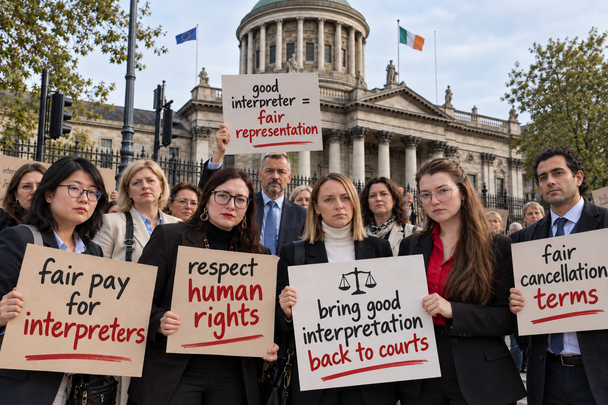 Fair Standards for Interpreters Delivering Publicly Funded ServicesPublic bodies depend on the availability of competent interpreters to deliver essential services effectively. People who cannot adequately understand or communicate in English depend on competent interpreters to access essential services and exercise their rights, including the right to a fair trial. The availability of experienced and suitably qualified interpreters is therefore integral to the effective delivery of justice, not merely an administrative convenience. In practice, some intermediary interpreting agencies offer contractual terms under which they pay only for time spent actually interpreting, while significant costs and professional time associated with fulfilling the assignment are transferred to the interpreter. These may include several hours of return travel, vehicle and fuel costs, parking and tolls, as well as the loss of other work when a substantial period has been reserved for an assignment that is subsequently cancelled at short notice. By way of illustration, an interpreter may be offered an 8-hour assignment with a minimum guaranteed duration of one hour and a minimum total payment of €22. The same terms may provide for a cancellation payment of only €11 if the assignment is cancelled within one hour of the scheduled start. In effect, the interpreter may have to reserve an entire working day and, if the assignment is cancelled within one hour of the scheduled start, receive only €11. Where the assignment finishes early or is cancelled at short notice, replacing the lost work is highly unlikely, as interpreting assignments are commonly arranged in advance. Where contractual conditions discourage experienced professionals from accepting publicly funded assignments, the consequences can affect service quality, continuity and efficiency, and ultimately the value obtained from public expenditure. If experienced interpreters increasingly decline assignments, public bodies may face a smaller pool of available qualified interpreters and greater difficulty securing appropriate interpreting services when they are needed. Apparent savings on interpreting costs can create wider costs for public services through delays, adjournments, additional administrative work and urgent replacement arrangements. Poor-quality interpreting can prolong proceedings or, in serious cases, undermine them altogether. In 2021, the Court of Appeal quashed convictions in an Irish criminal case after finding that serious interpretation errors had rendered the trial unfair. The lowest immediate cost of an interpreter does not necessarily deliver the best value for public money. Full text of the petition may be found here.330 of 400 SignaturesCreated by Olga Tarasova
 -
 Petition Against the Irish Nationality and Citizenship (Amendment) Bill 2026The Call: UAR therefore calls on the Minister for Justice and the Oireachtas to clarify the following points: • The Bill justifies the increase from 5 to 8 years as a means to "establish a proportionate timeline that encourages steady economic and social integration before naturalisation." We request an in-depth explanation of why 8 years is considered necessary and why 5 years of lawful residence, tax contributions, community participation and family life are no longer sufficient evidence of integration. • The Bill allows the Minister for Justice to revoke citizenship on the basis of ‘national security.’ We have heard from Irish residents who are worried that such removals may be conducted against political dissenters, like the reprisals we have seen against pro-Palestine activists in the USA. We request an explanation of what falls under ‘national security,’ and how the Minister of Justice intends to apply this provision of the Bill. • Subsections 15(3)(a) and 15(3)(b) require that the naturalisation applicant, at the time of the application, to be in receipt of a ‘minimum’ level of income and to have not received social welfare for a period of two years. Given that migrants, and particularly vulnerable asylum seekers, often face labour restrictions that limit their income, and given that Ireland is experiencing a cost of living crisis in which 70% of young Irish adults are considering economic emigration, we find this provision of the Bill disturbing. We request clarification of the ‘minimum’ income required of naturalisation applicants and an explanation of how the government plans to support migrants in achieving economic stability in Ireland. We request an answer to these questions in writing. To ensure that a full explanation is delivered, including to any additional questions arising from the government’s written reply, we request that the Public Petition Committee host a public meeting on the matter with representatives of the Department of Justice, Home Affairs and Migration, and members of the Public Petition and Ombudsman Committee. We request that this meeting be broadcast on the Oireachtas channel, and that the minutes of that meeting be brought into the Dáil for possible further debate. Sincerely, United Against Racism and supporters.237 of 300 SignaturesCreated by United Against Racism Ireland
 -
 Make Macklemore Grand Marshal of Dublin's St. Patrick's Day Parade 2027We call on the Board of the National St. Patrick's Festival to name musician Ben Haggerty — known worldwide as Macklemore — as Grand Marshal of the 2027 St. Patrick's Day Parade in Dublin. Macklemore has spoken proudly and publicly about his Irish heritage, connecting his family's story to the broader story of the Irish diaspora. He has used his platform not just to celebrate that identity, but to live out values many in Ireland hold dear: solidarity with the oppressed and a willingness to speak plainly about injustice, even when it's unpopular. Since October 2023, Macklemore has been one of the most visible artists in the world willing to speak out on the suffering of Palestinians in Gaza and the West Bank. He released "Hind's Hall," donated proceeds to humanitarian relief, and has consistently used interviews and performances to draw attention to the human cost of the conflict — actions that cost him commercially and professionally at points in his career. Ireland has a long history of solidarity with Palestine, rooted in its own experience of colonisation and partition. Naming Macklemore as Grand Marshal would be a fitting way to honour an artist whose Irish-American identity and moral courage reflect values central to Irish identity itself: standing with the powerless against the powerful. We ask the Board to recognise this by naming Macklemore Grand Marshal of the 2027 Dublin St. Patrick's Day Parade.8 of 100 SignaturesCreated by Brendan Mac Miadhacháin
 -
 Petition to Make Neurodivergent Assessments Accessible for Adults Through the HSEA letter to Minister Mary Butler, to the HSE, to the government, and to whomever may listen. I hope your day is going well. If you have a few moments to read this letter, I would be extremely grateful for your time. Autism, ADHD, Spectrum Disorder, Sensory Disorder. These are all words that I’m sure you’ve heard before. Many of times, if these words are said we think of a young boy who struggles to sit still in class, or has to wear ear defenders to get through the fireworks on Halloween. Maybe at a push, it may be the young girl who has a special interest in horses, or has to bring her fidget toy to school with her. However, what if I were to tell you that neurodivergence is much more than that, and it doesn’t stop when you reach a certain age. What if I told you that Mia, aged 19 is being bullied in her PLC because she dared to express her special interest in a kids cartoon? Or that Aoife, aged 26 is constantly called lazy and doesn’t know why she can’t just get out of bed and complete a task? Or that Michael, aged 30 has failed to carry out 6 attempts at a college education, because the campus is too loud and there was no where for him to go to decompress, so he just decides not to go in at all? Many individuals aged 18 and upwards have lived entire lives trying to survive in a world that wasn’t built for them. I can speak from direct experience when I say that these individuals face invisible challenges every day such as executive disfunction, time keeping, distraction, troubles around socialising, finding self esteem and experiencing invisible torture when it comes to navigating the world through sound, sight, smell, taste and touch. I could go on and on forever, and yet not nearly enough people are given support for these issues. The biggest question around lately has been “Why is there such a mental health epidemic in this country as of late?” and my answer to you is support. I would like to explain why I believe that the lack of support for individuals over the age of 18 with neurodivergent symptoms of traits could be one of the major reasons for this epidemic. Individuals 18 years or older (predominantly women) with possible Neurodivergence are turned away from Primary Care centres, Community Mental Health centres and Psychiatric Assessment wards and clinics all because of their age. This is a ridiculous and outdated practice, as neurodivergence doesn’t end once an individual has turned 18 years of age. For many people, women especially, neurodivergence is already under diagnosed or recognised in places like CAMHS because of the ignorance around the typical symptoms of neurodivergent disorders in girls and women. I would like to point out that this is a spectrum, many people mask and are left feeling inadequate, alone and isolated and later down the line told that they instead have psychiatric mood disorders such as BPD. This is so that the doctors in positions of power can fob them off and take lunch early. If neurodivergence was supported properly in this country, the knock on effect of issues such as Anxiety disorder, OCD, mental burnout and Depression etc. would decrease, as the root of the problem would be investigated, instead of the symptoms resulting from it. This is such a major issue and if we pull together to get it sorted, adult individuals living with neurodivergence could finally find peace of mind and support that they’ve always needed in their workplaces, education and communities. If you want real change in the mental health of individuals across Ireland, listen to their concerns!!! This is not a petition to continue labelling people. This is not a cry for attention This is a cry for support and help for those who deserve real assessment, real validation in their experience and real support without having to find €2000-€3000 just to be told something they already know. Thank you for your time and if you agree with this letter, please sign the petition. Something has to change. Kind Regards, Sienna Reynolds A Social Care Practice Student with real life experience wanting to make a difference.83 of 100 SignaturesCreated by Sienna Reynolds
 -
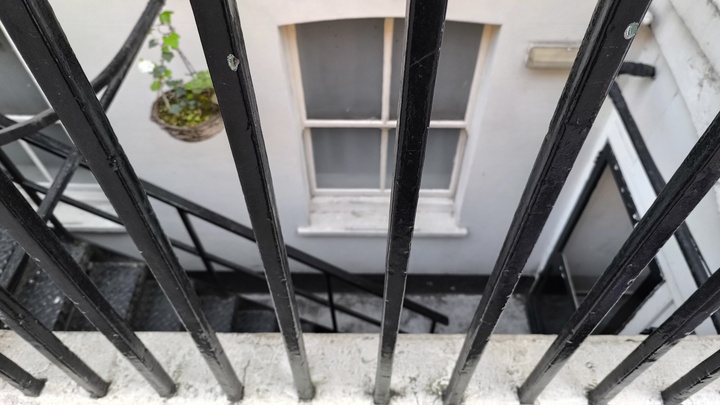 Time for a truthful account of the death of Celia de Jesus!On 24th October 2011, Irish citizen and hospice worker Celia de Jesus lost her life during a major flood event in Dublin. Unable to exit her basement flat as floodwater quickly rose at her door, she was trapped and drowned. In his report, the Dublin District Coroner of the time argue that Celia de Jesus drowned “as a result of a surge of water and flooding over a short period of time following two days of heavy rain”, reaching a final verdict of “death by misadventure”. However, extensive research into the tragic event reveals that the coroner report omits several pieces of evidence clearly challenging the conclusion of the report. Two of the main pieces of evidence left out of the report are as follows: • EVIDENCE 1: Celia de Jesus’s landlord had not received planning permission to divide the basement of his property into two rental units. Celia de Jesus was therefore renting an unauthorised basement flat. Furthermore, while located in a well-known flood-prone area, the basement flat had only one means of exit, the entrance door. All windows of the flat were blocked with metal bars. When Celia de Jesus was unable to open her entrance door for unknown reasons, she had no other means of exit at her disposal and was trapped. These pieces of evidence are never explicitly mentioned in the report and never outlined as a major cause of the tragic death. Instead, the claim is made that the works to divide the basement into two rental units (“appear to”) precede the Building Control Act 1990 and that, as a result, they shall be deemed to have been permitted. However, such a legal technicality cannot justify entertaining a misleading account of the tragic death. • EVIDENCE 2: In the coroner report, a list of planning applications submitted for the property in which Celia de Jesus died, both granted and refused, is provided. However, one planning application, dated 2009 and refused, is not included in the list. In this planning application addressed to Dublin City Council, it is stated that the property in which Celia de Jesus lived and died is “not of a habitable standard” (architect report, planning application 3066/09). Despite such a concerning statement, the issue failed to be addressed, which constituted another significant enabler of the tragic event. Following the tragic event and until now, various state and local government agencies, among them Dublin City Council, South Dublin County Council and the Office of Public Works, have actively sustained the misleading account of Celia de Jesus’s death in reports and during public meetings. Instead of mentioning the planning breach and institutional failure that led to the tragic death, they consistently and unliterally blamed the flood. The misleading account was widely relayed in the local and national press and among local communities. As we are now approaching the fifteenth anniversary of the tragic death, we ask Dublin City Council, South Dublin County Council, the Office of Public Works and the Minister for Justice to take the following actions as a matter of urgency: • ACTION 1: Issue a public statement explaining the full circumstances of the death of Celia de Jesus based on all available evidence • ACTION 2: Issue a public apology for having sustained a misleading account of the tragic death • ACTION 3: Request an immediate review of the coroner report and of its final verdict Please sign the petition to support these demands and share as widely as you can thank you!103 of 200 SignaturesCreated by Laure De Tymowski
 -
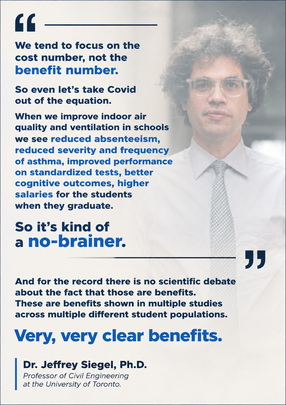 Protect Our Children: Clean Indoor Air and the Truth About Long COVIDChildren spend a huge proportion of their lives in classrooms. They should not have to breathe poorly ventilated, unfiltered, rebreathed air for six hours a day when practical solutions exist. COVID has not disappeared. Reinfections continue, and a proportion of children and adults (16% according HSE FADA report, 15-53% according to HIQA's review of international evidence, 16% according to Mass General Brigham study, 2026, 27% of healthcare workers according to NHS REACH-OUT study, 2026) develop Long COVID — sometimes with disabling symptoms. Due to the lack of information on long Covid in Ireland, much of this harm is going undiagnosed or is not attributed to the real cause, COVID-19 infection. The WHO, the CDC, the OECD and other international organizations continue to warn about Long COVID, including its impact on children, yet public awareness in Ireland remains remarkably low. Clean indoor air is one of the few interventions that can protect everyone without requiring individual behaviour. Good ventilation and appropriately sized HEPA filtration reduce exposure to airborne infectious particles while also helping to reduce pollutants, allergens and particulate matter. Other places are already acting. Schools in London, parts of the United States, Canada, Australia and elsewhere have introduced filtration, air-quality monitoring or wider clean-air programmes. Ireland announced €62 million for school ventilation improvements and HEPA filtration in December 2021, yet HEPA filtration is still not standard in Irish classrooms. This is also about the right to honest public-health information. Parents should be given clear, current information about airborne transmission, Long COVID, women and girls being at greater risk of Long COVID, reinfection and the potential longer-term consequences of infection so that they can make informed decisions for their families. The information vacuum on the reality of Long COVID and the huge burden it puts on the healthcare system is being filled by racist, antivax conspiracy theorists. Clean Indoor Air will save lives and improve the health and wellbeing of children today and for generations to come. The infrastructure we put in place now will protect pupils and teachers from COVID, influenza and many other airborne infections, while improving the everyday quality of the air they breathe. Ireland entered the pandemic with the 4th highest rate of asthma in the world with 1 in 5 children suffering and as an outlier in the EU with rising deaths from asthma. It is an abomination that the government decided against making HEPA filters standard in classrooms when faced with COVID-19, and we feel it is an insult to our intelligence and an exercise in gaslighting when politicians and media discuss issues such as "alarming rates of absenteeism" and "record breaking hospital overcrowding", while completely ignoring the reality of long COVID. We know how to make indoor air cleaner. We know how to reduce airborne transmission. Parents deserve accurate information about the risks. What is missing is the political will to act. Please join us in asking the Government to make clean air and honest public-health information a basic standard for every child in Ireland.31 of 100 SignaturesCreated by Parents For Clean Air —
-
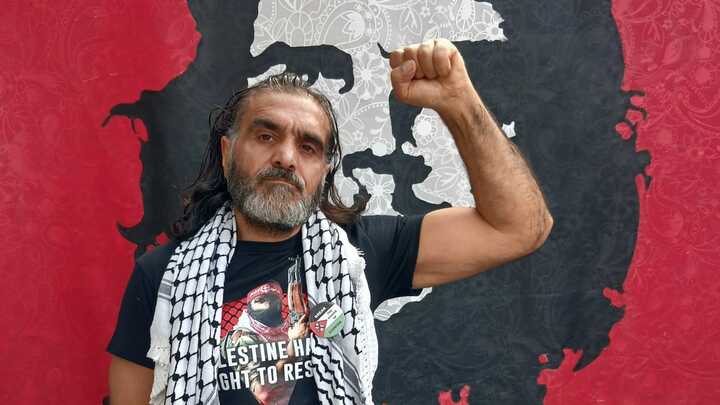 Urgent Request to Halt Deportation of Sami KupiszeskiWe should support this because deporting someone who may face persecution or torture for their political activism is not just an immigration issue but a question of human rights and Ireland’s responsibility under international law. If there is credible evidence that Sami could be at risk in Türkiye, Ireland should ensure that he is not returned to a situation where he could be harmed. Standing up for him also means defending the principle that political dissent should not be criminalised or punished through deportation. This is about making sure Ireland’s asylum and human-rights commitments are applied consistently, regardless of who the person is.71 of 100 SignaturesCreated by Firyal Azeera Syed Abuthahir
 -
Visa for Gaza studentsThe educational and administrative systems in Gaza have broken down and it is impossible for some students to complete every detail in their visa applications. These students have been accepted by Irish universities. They are the people that will be needed to help rebuild the physical and administrative systems in Gaza, if that is ever possible. The Department of Justice can be guided by the applications offices in the different universities and automatically give visa to those students from war-torn Gaza, who have been accepted. We urge you to intervene immediately, and ensure these students can avail of the educational opportunities they, and their communities in Gaza need.8,170 of 9,000 SignaturesCreated by Art Ó Laoghaire
-
 Support Ireland’s monitoring of Germany’s “show trial” against the Ulm 5!Who’s really on trial here: The Ulm 5 - or German justice? Family and loved ones of the Ulm 5 ask you to bring attention to this trial. Please sign the petition! If you care about genocide, this is something to pay attention to. Five young people - including Irish citizen, Daniel Tatlow-Devally,- are on trial in Stuttgart, Germany for aiming to prevent genocide. They are now known as the ‘Ulm 5’. Aiming to uphold international law, they caused damage to an Elbit Systems Germany site (Elbit Systems is responsible for over 80% of arms in the genocide in Gaza). Germany is second only to the United States in providing arms to Israel. The five had no previous convictions and waited for their arrest without resistance. Throughout pretrial detention, the defendants have been peaceful and pose no risk to any persons. Four of the five are citizens of Germany’s EU and Council of Europe (CoE) partners - EU and CoE membership is defined by upholding all citizens’ fundamental rights. The promise of European human rights is meaningless if governments do not hold each other to account when breaches and injustices take place. The Ulm 5’s defence counsel say their constitutional and human rights are being breached by the court. Every trial day the Ulm5 are brought in handcuffed behind two meter high bullet proof glass separating them from their lawyers.This paints a picture of dangerous criminals, contradicting their charges and, furthermore, their EU right to presumption of innocence, while Germany continues to provide material support to the ongoing genocide in Gaza. Germany’s trusted EU/CoE partners must not fear holding them accountable where CoE/EU rights are being violated particularly when one of their own citizens is being affected. Monitoring this trial by government representatives is legally permitted. Constitutional and human rights to a fair trial are being breached by the court such as: • The court did not allow the defence to speak at all on the first day of the trial • The judge stated that anything the defence tried to say would vanish into thin air as she determines the version of record • The defendants are allowed only limited contact with their lawyers • The court had the defendants marched into the courtroom in front of the lay judges, by five prison officers, in handcuffs, and in a glass cage, against ECtHR rulings and the lawyers’ protests • The court has made extremely prejudicial statements to the press about the Ulm 5, comparing them to murderers, terrorists, violent coup supporters and violent gangs • The court chose to hold the trial in a high-security venue of the Higher Regional Court and has not sought normal courtrooms in their own Regional Court for this trial • The court has refused the defenses’ motion to bring in an independent court stenographer. Currently, the Judge is the only record keeper. • The court has also refused to hear multiple motions calling for the presiding Judge to be recused What we are requesting: • For the Irish Government to send legal observers to ensure a just trial.The Minister for Foreign Affairs has already promised fair oversight of this trial. This can only be achieved through governmental observation.3,421 of 4,000 SignaturesCreated by Clara Tatlow-Devally
 -
New skatepark tullamore offalyOther people should join me in this campaigne because there has been many issues lately with the tullamore skate scene as the park is an unsafe place and the skatepark no longer feels like a fun place to learn to skate there is many skaters in tullamore and only one skatepark is no longer enough134 of 200 SignaturesCreated by Jack pidgeon
-
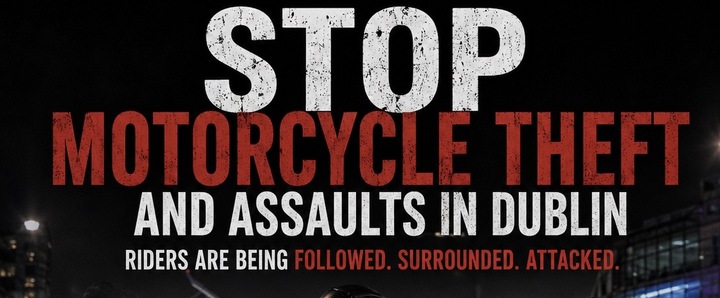 Stop Motorcycle Theft and Violent Stolen-Bike Crime in DublinDublin has a serious public safety problem involving motorcycle theft, violent robbery and stolen-bike crime. This is no longer only about stolen property. Riders are being followed, surrounded, threatened, assaulted and, in some cases, pushed or dragged from their motorcycles while offenders take the bike. Motorcycles are being stolen from homes, apartment blocks, workplaces, public streets and parking areas. Chains are being cut in public. Many incidents involve masked groups. Victims and witnesses have reported knives, hammers and other weapons. Stolen motorcycles, scramblers, mopeds and e-bikes are then used dangerously on roads, footpaths and around members of the public. Motorcyclists, delivery riders and commuters are being placed in fear. Some riders are forced to escape when followed or surrounded, creating further danger for themselves, pedestrians, drivers and other road users. This is now a wider public safety issue for Dublin. Figures raised in Dáil Éireann showed that 787 motorbikes were stolen in Dublin in 2023, around a 100% increase on the previous year. It was also stated that for every 100 motorbikes bought or registered in Dublin in 2023, 44 were stolen. These numbers show that the current response is not enough. This petition is not a call for vigilantism, confrontation or people taking the law into their own hands. It is a lawful request for the State to act before more people are seriously injured or killed. Dublin should not become a city where masked groups can openly cut chains, steal motorcycles, attack riders, threaten people with weapons, post stolen vehicles online and endanger the public without meaningful consequences. Motorcycles are not toys. For many people they are transport to work, a livelihood, a financial investment and their only affordable way to commute. We are asking for lawful enforcement, prevention, accountability and protection for riders and the public.541 of 600 SignaturesCreated by Dublin Motorcycle Safety Campaign
 -
Declare Your Intention to Boycott TDs Who Act to Remove the Triple LockThe removal of the Triple Lock will almost certainly result our forces being compelled to partake in illegal wars -- wars which in the past have always resulted in the killing and maiming of innocent civilians. The gravity of this cannot be understated. The threat of a life-time boycott of the private commercial interests of TDs who become complicit in this egregious abandonment of the Triple Lock is warranted. This petition is a declaration of intent of people to boycott the private business interests - now and in the future - of any TD who ultimately acts to remove the Triple Lock. If enough signatures are obtained the declaration will be emailed to all TDs in advance of any vote on the removal of the Triple Lock. In doing so, this will clarify for all the depth and breadth of opposition to this planned removal. Even if the number of signatures is a small proportion of the population as a whole, it would serve as an indication of the strength of public opinion. A list of current business interests (directorships, significant shareholdings, contracts) of TDs who act to remove of the Triple Lock will be maintained for reference. This list can be maintained up-to-date and promoted in future. "It Is Difficult to Get a Man [sic] to Understand Something When His Salary Depends Upon His Not Understanding It." - Upton SinclairWe can help them understand more clearly9 of 100 SignaturesCreated by Paul Delany
Hello! We use cookies to save you time and show you more relevant campaigns. Need more information?