-
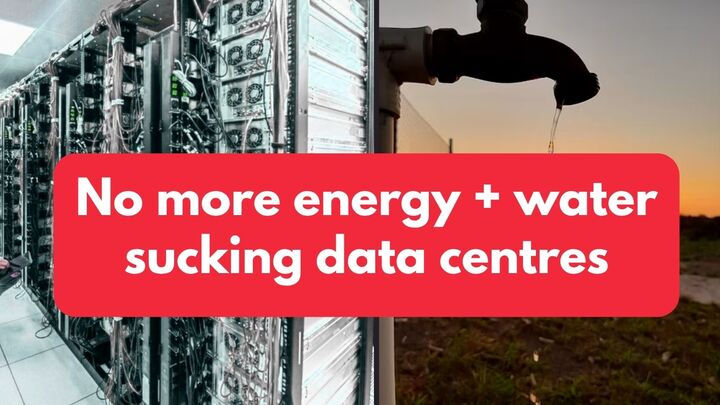.jpg) No more energy + water sucking data centresWhile the government cosies up to big tech billionaires, ordinary people are paying the price. This endless growth of data centres is: • Driving up our energy bills - households in Ireland paid €715 million more in electricity bills between 2015 and 2023 to subsidise the huge growth in data centres. Data centres also pay less for electricity than households. • Draining our water supply - while people are forced to conserve water, data centres are allowed to use millions of litres a day. Over the summer of 2026, data centres doubled their water use in Ireland. • Straining our energy grid - data centres now use 23% of all electricity in Ireland, and this is projected to grow to 31% by 2035. Instead of households being able to access clean, cheap energy, this is being sucked up by data centres. • Affecting local communities - with air and noise pollution, and pressure on local infrastructure and services. • Driving demand for more dirty gas - and encouraging the government to support new infrastructure to import more dirty, expensive gas to Ireland. • Powering dangerous war and surveillance - investigations show that data centres in Ireland are providing cloud storage services to Israel’s military intelligence agency. There have been limits placed on data centres in Ireland before, but we desperately need more. The government must reinstate a moratorium now, to address the huge harms that data centres are having on our communities. We are planning to hand over this petition together with Friends of the Earth Ireland.74 of 100 SignaturesCreated by MyUplift
No more energy + water sucking data centresWhile the government cosies up to big tech billionaires, ordinary people are paying the price. This endless growth of data centres is: • Driving up our energy bills - households in Ireland paid €715 million more in electricity bills between 2015 and 2023 to subsidise the huge growth in data centres. Data centres also pay less for electricity than households. • Draining our water supply - while people are forced to conserve water, data centres are allowed to use millions of litres a day. Over the summer of 2026, data centres doubled their water use in Ireland. • Straining our energy grid - data centres now use 23% of all electricity in Ireland, and this is projected to grow to 31% by 2035. Instead of households being able to access clean, cheap energy, this is being sucked up by data centres. • Affecting local communities - with air and noise pollution, and pressure on local infrastructure and services. • Driving demand for more dirty gas - and encouraging the government to support new infrastructure to import more dirty, expensive gas to Ireland. • Powering dangerous war and surveillance - investigations show that data centres in Ireland are providing cloud storage services to Israel’s military intelligence agency. There have been limits placed on data centres in Ireland before, but we desperately need more. The government must reinstate a moratorium now, to address the huge harms that data centres are having on our communities. We are planning to hand over this petition together with Friends of the Earth Ireland.74 of 100 SignaturesCreated by MyUplift -
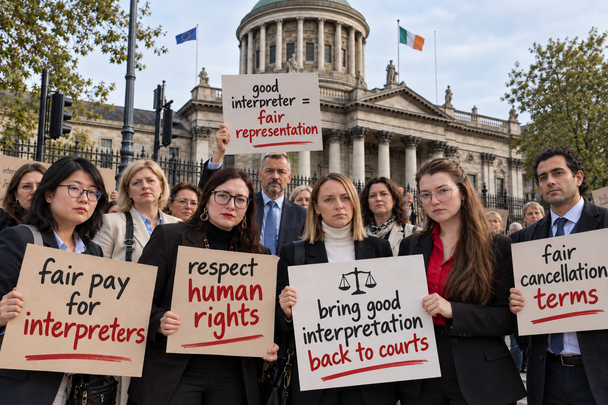 Fair Standards for Interpreters Delivering Publicly Funded ServicesPublic bodies depend on the availability of competent interpreters to deliver essential services effectively. People who cannot adequately understand or communicate in English depend on competent interpreters to access essential services and exercise their rights, including the right to a fair trial. The availability of experienced and suitably qualified interpreters is therefore integral to the effective delivery of justice, not merely an administrative convenience. In practice, some intermediary interpreting agencies offer contractual terms under which they pay only for time spent actually interpreting, while significant costs and professional time associated with fulfilling the assignment are transferred to the interpreter. These may include several hours of return travel, vehicle and fuel costs, parking and tolls, as well as the loss of other work when a substantial period has been reserved for an assignment that is subsequently cancelled at short notice. By way of illustration, an interpreter may be offered an 8-hour assignment with a minimum guaranteed duration of one hour and a minimum total payment of €22. The same terms may provide for a cancellation payment of only €11 if the assignment is cancelled within one hour of the scheduled start. In effect, the interpreter may have to reserve an entire working day and, if the assignment is cancelled within one hour of the scheduled start, receive only €11. Where the assignment finishes early or is cancelled at short notice, replacing the lost work is highly unlikely, as interpreting assignments are commonly arranged in advance. Where contractual conditions discourage experienced professionals from accepting publicly funded assignments, the consequences can affect service quality, continuity and efficiency, and ultimately the value obtained from public expenditure. If experienced interpreters increasingly decline assignments, public bodies may face a smaller pool of available qualified interpreters and greater difficulty securing appropriate interpreting services when they are needed. Apparent savings on interpreting costs can create wider costs for public services through delays, adjournments, additional administrative work and urgent replacement arrangements. Poor-quality interpreting can prolong proceedings or, in serious cases, undermine them altogether. In 2021, the Court of Appeal quashed convictions in an Irish criminal case after finding that serious interpretation errors had rendered the trial unfair. The lowest immediate cost of an interpreter does not necessarily deliver the best value for public money. Full text of the petition may be found here.326 of 400 SignaturesCreated by Olga Tarasova
 -
 Stop data centre development in KildareLand beside our homes is zoned exclusively for hyperscale Data Centres. Two areas near Jigginstown and the M7 are zoned “P - Data Centre Only” in the Naas Local Area Plan (shown in purple below). The M7 Business Park site already has planning permission - granted by Kildare County Council and now under appeal to An Coimisiún Pleanála. The Jigginstown site, which backs directly onto Primrose Garden, has no planning application yet. Once an application is lodged, it becomes more difficult to stop - that’s the lesson from the M7 site. Do you want to live this close to a data centre? WATER We’re currently living under a nationwide hosepipe ban and data centres are exempt from it. As commercial users, they can keep using water throughout. Data centres nationally have used over 1.7 billion litres of public water since 2024, and Uisce Éireann itself admits it can’t fully explain its own figures. CLOSE TO WHERE WE LIVE This land is next to homes, schools and horse studs. The Jigginstown site alone is over 7 times the area of Croke Park. Even with mitigation, developments this size bring 24-hour noise, lighting and years of heavy construction traffic. ELECTRICITY Data centres are already 21% of Ireland’s electricity. More data centres mean more pressure on the grid, more gas-fired backup power, and higher costs for all of us as billpayers and taxpayers. OUR ENVIRONMENT Ireland’s climate commitments have changed significantly since 2021 – grid capacity, water resilience and our carbon budgets are all under far more pressure now. If Ireland misses its EU climate targets, taxpayers pay the fines.62 of 100 SignaturesCreated by Nicolò Wojewoda
-
Pause AI IrelandIreland aims to position itself as a global leader in AI adoption and innovation. PauseAI Ireland believes we must also be a global leader in AI regulation. A recent survey of AI researchers shows that over half of them think there's at least a 1 in 10 chance that AI could end all life on earth. We are calling for a pause on the development of the most dangerous AI systems until their builders can prove, to independent evaluators, that they are safe. No company should be allowed to deploy systems that reshape the economy, the information environment, and the balance of power without showing their work. The burden of proof belongs with the people doing the building, not with the rest of us.35 of 100 SignaturesCreated by PauseAI Ireland

-
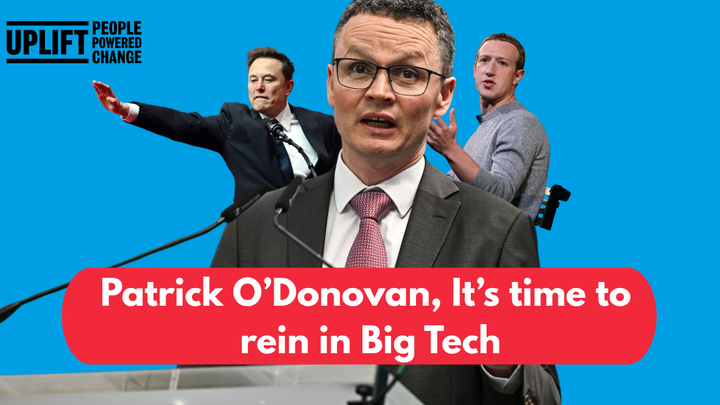.png) Stop Meta, TikTok & YouTube Profiting From Videos of Wrong-Way Crashes on Irish RoadsEvery time a video of a car driving the wrong way, or a crash caused by it, goes viral, more lives are put in danger and more families are destroyed. Social media bosses make millions from pushing this content into the feeds of people who then watch and share it. We deserve an internet that keeps us safe - not one that puts us in danger. Patrick O'Donovan is the person who is in charge of reining in big tech bosses. He needs to do his job, not pander to them, while putting the responsiblity back on the sholders of parents, schools, communities.1,437 of 2,000 Signatures
Stop Meta, TikTok & YouTube Profiting From Videos of Wrong-Way Crashes on Irish RoadsEvery time a video of a car driving the wrong way, or a crash caused by it, goes viral, more lives are put in danger and more families are destroyed. Social media bosses make millions from pushing this content into the feeds of people who then watch and share it. We deserve an internet that keeps us safe - not one that puts us in danger. Patrick O'Donovan is the person who is in charge of reining in big tech bosses. He needs to do his job, not pander to them, while putting the responsiblity back on the sholders of parents, schools, communities.1,437 of 2,000 Signatures -
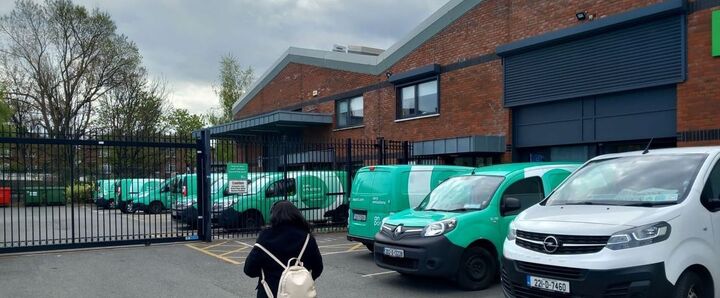 Save Our Postal Depots!Local communities rely on An Post to deliver accessible services. Currently, there are three Delivery Service Units (DSUs) in Dublin South Central, located at Dolphin's Barn, Crumlin, and Ballyfermot. These are the depots where people who live in Dublin 8, 10 and 12 go if they need to collect a package. Under new plans from An Post, these DSUs will be moved out of their local areas, and relocated to a single 'superhub' in Lucan. This will be disastrous for both residents of Dublin 8, 10 and 12, and the postal workers providing a vital service for these communities. For local residents of Dublin 8, 10, and 12, they will now have to travel to Lucan just to pick up their missed packages. For locals of Rialto, Crumlin, and other areas, this could mean hours on public transport, or stuck in traffic. For anyone with caring responsibilities or disabilities, making this commute will just not be possible. For An Post's own workers, these changes will result in degradation of their working conditions. Many of these workers have built their lives around where they work, but are now being told that that they will need to make long commutes on a daily basis, just to carry out their role of providing a vital service for their local communities. These longer commutes will also result in routes not being finished. If a postal worker gets stuck in traffic between Lucan and Ballyfermot, for example, they will not be able to complete their route, and will have to return undelivered packages to the superhub in Lucan. Moreover, the environmental impact of this change cannot be overlooked. Increased travel distances mean more traffic congestion and higher carbon emissions, contributing to pollution and climate change—concerns that should be at the forefront of our decision-making processes. We are calling on An Post to drop these plans immediately. These changes will be disastrous for the residents of Dublin 8, 10 and 12, and the postal workers that service those communities. Instead of relocating these services out of local communities, we call an An Post to invest in improving the existing facilities in Dolphin's Barn, Crumlin, and Ballyfermot. Postal services are a vital community infrastructure, and they need to stay in communities.2,071 of 3,000 SignaturesCreated by Hazel De Nortúin
 -
New skatepark tullamore offalyOther people should join me in this campaigne because there has been many issues lately with the tullamore skate scene as the park is an unsafe place and the skatepark no longer feels like a fun place to learn to skate there is many skaters in tullamore and only one skatepark is no longer enough134 of 200 SignaturesCreated by Jack pidgeon
-
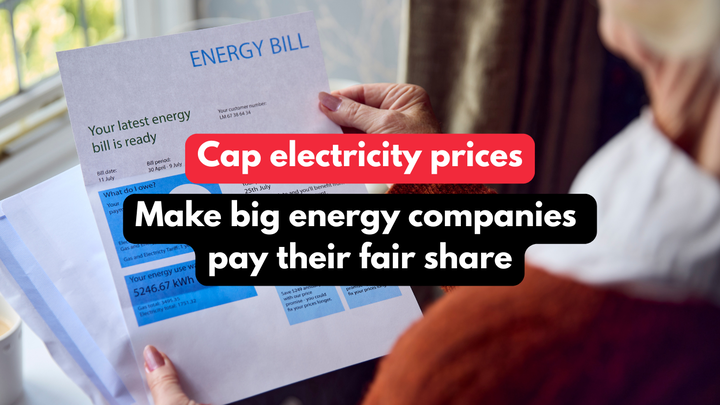%20(2).png) Cap electricity pricesWe are calling on the Government to make big energy companies pay their fair share and commit to a windfall tax on record profits. Irish homes already pay the most for electricity in Europe. In the same news headlines that tell us families are cutting back on food and heating, we’re hearing about the record-breaking profits gas, oil, and energy suppliers are making since the illegal war in Iran started. A windfall tax can be used to cap electricity prices and protect households from rising energy costs during the ongoing cost of living crisis. Government Ministers have said they're open to the idea in the media - now we need them to commit and get this solution over the line. Families, workers, pensioners, and vulnerable people are being forced to choose between heating their homes and covering basic necessities. Energy is an essential service, not a luxury, and urgent action is needed to ensure electricity remains affordable for everyone.2,178 of 3,000 SignaturesCreated by Jacob Sosinsky
Cap electricity pricesWe are calling on the Government to make big energy companies pay their fair share and commit to a windfall tax on record profits. Irish homes already pay the most for electricity in Europe. In the same news headlines that tell us families are cutting back on food and heating, we’re hearing about the record-breaking profits gas, oil, and energy suppliers are making since the illegal war in Iran started. A windfall tax can be used to cap electricity prices and protect households from rising energy costs during the ongoing cost of living crisis. Government Ministers have said they're open to the idea in the media - now we need them to commit and get this solution over the line. Families, workers, pensioners, and vulnerable people are being forced to choose between heating their homes and covering basic necessities. Energy is an essential service, not a luxury, and urgent action is needed to ensure electricity remains affordable for everyone.2,178 of 3,000 SignaturesCreated by Jacob Sosinsky -
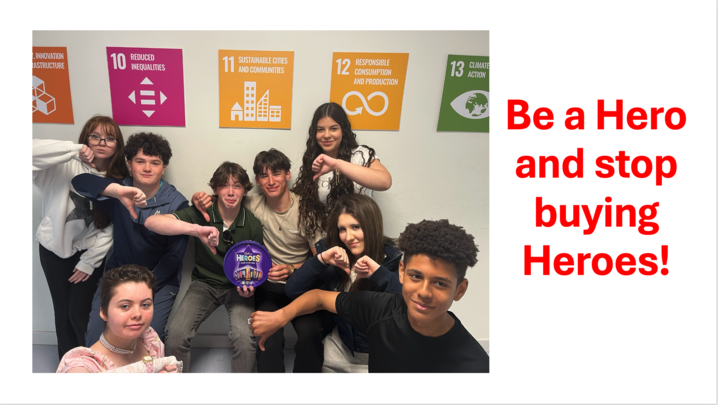 Xmas FM - please stop accepting sponsorship from Cadbury's!Because every child deserves Magic at Christmas, even children who are employed in slave labour in the cocoa industry who supply Cadbury's. " Mondelēz International — the food giant behind Oreos, Cadbury, and Toblerone — has spent years cultivating an image as a sustainability leader, earning high environmental scores and pledging to eliminate deforestation and human rights abuses from its supply chains. Investigative reporting, however, reveals a starkly different reality: of a company that appears more focused on protecting its reputation than preventing harm to vulnerable people and the planet. For decades, Mondelēz has faced scrutiny over its cocoa sourcing in West Africa, where child and forced labor are widely documented and an estimated 1.56 million children work on cocoa farms. In 2022, a Channel 4 investigation reported that children as young as ten were using machetes to harvest cocoa pods on a Ghanaian farm allegedly linked to Mondelēz. Mondelēz has emphasized that such practices violate its policies and has pointed to its child labor monitoring system. But that system does not cover all the farms in its supply chain, and the company lacks full traceability for its cocoa — meaning it cannot determine whether child labor is involved in some of the cocoa it uses." Source: https://www.ran.org/the-understory/mondelez-has-built-a-reputation-on-sustainability-we-call-it-deception/179 of 200 SignaturesCreated by Aine Sreenan
 -
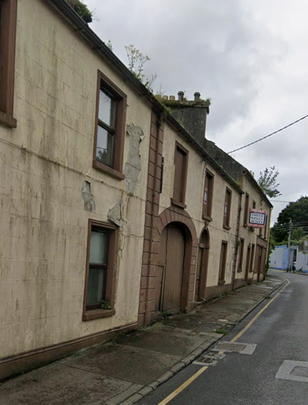 Bring Aldi to BoyleJob creation, housing, and much needed investment and rejuvenation of St Patrick's street326 of 400 SignaturesCreated by Freda Forde
 -
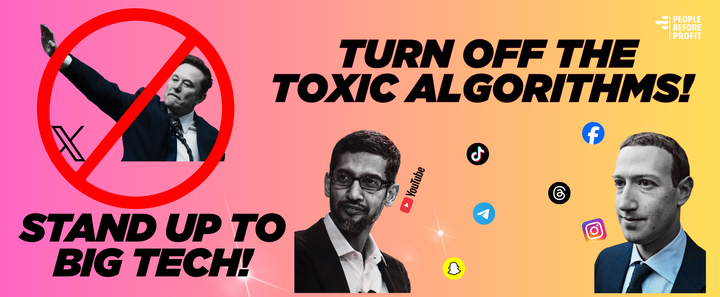.png) Turn off the Toxic AlgorithmsFor ourselves, for our children, we must get rid of these toxic algorithms on social media platforms that push harmful content at people, all for the sake of their profits. The First Interim Report of the Joint Oireachtas Committee on Artificial Intelligence published last month recommended that: "Recommender systems should be switched off by default and social media companies should be banned from turning on recommender algorithms for accounts used by children." Numerous studies have shown that social media recommender algorithms are bombarding children with harmful material, including material that promotes self-harm, anorexia and suicide and toxic content that promotes misogyny, racism, homophobia and transphobia. A recent study found that 10 blank male-identified accounts of 16 and 18 year olds on 10 blank smartphones were all fed anti-feminist and other extremist content within just 23 minutes. Within three hours the vast majority of the content recommended was toxic, primarily alpha male and anti-feminist content, with Andrew Tate featuring heavily. Three-quarters of the public believe that there should be stronger regulation of social media algorithms and, in 2024, Coimisiún na Meán’s draft Online Safety Code included a recommendation to turn off recommender algorithms by default. However, this was scrapped following lobbying by the big tech companies. Social media corporations have created an immensely damaging public health and safety crisis in pursuit of profit, but the Government has failed to take any meaningful action.175 of 200 SignaturesCreated by Paul Murphy TD
Turn off the Toxic AlgorithmsFor ourselves, for our children, we must get rid of these toxic algorithms on social media platforms that push harmful content at people, all for the sake of their profits. The First Interim Report of the Joint Oireachtas Committee on Artificial Intelligence published last month recommended that: "Recommender systems should be switched off by default and social media companies should be banned from turning on recommender algorithms for accounts used by children." Numerous studies have shown that social media recommender algorithms are bombarding children with harmful material, including material that promotes self-harm, anorexia and suicide and toxic content that promotes misogyny, racism, homophobia and transphobia. A recent study found that 10 blank male-identified accounts of 16 and 18 year olds on 10 blank smartphones were all fed anti-feminist and other extremist content within just 23 minutes. Within three hours the vast majority of the content recommended was toxic, primarily alpha male and anti-feminist content, with Andrew Tate featuring heavily. Three-quarters of the public believe that there should be stronger regulation of social media algorithms and, in 2024, Coimisiún na Meán’s draft Online Safety Code included a recommendation to turn off recommender algorithms by default. However, this was scrapped following lobbying by the big tech companies. Social media corporations have created an immensely damaging public health and safety crisis in pursuit of profit, but the Government has failed to take any meaningful action.175 of 200 SignaturesCreated by Paul Murphy TD -
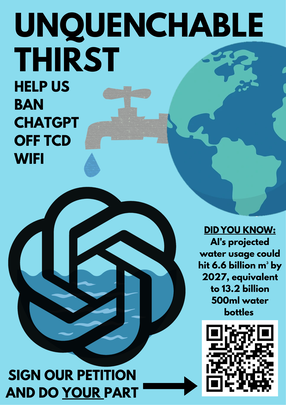 Unquenchable Thirst: OpenAI's Drinking Water Usage and How Trinity Can HelpThe environmental impact of using generative AI is incomprehensible to the general public. In 2025 alone, the data centers used to run OpenAI tools were responsible for 32.6 - 79.7 million tonnes of CO2 emissions. According to OpenAI engineers, clean drinking water must be used to cool the data servers in order to prevent "mineral build-up" in the cooling systems. Data centers are literally using one of humanity's most precious and scarce resources to cool their servers, and it is dwindling by the day. OpenAI's projected water usage could hit 6.6 billion m³ by 2027, which is equivalent to 13.2 billion 500ml water bottles. Although this issue seems out of our hands, students can do their part by helping ban ChatGPT from the Trinity College Dublin Wi-Fi. ChatGPT is the most widely-used generative AI model, thus, blocking access would drastically reduce students' contribution to this ever growing problem. You can help do your part by signing our petition!142 of 200 SignaturesCreated by Ella Flynn
Hello! We use cookies to save you time and show you more relevant campaigns. Need more information?