
-
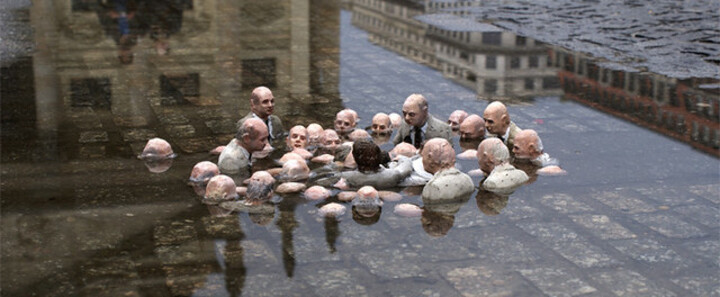 Screen a standalone national TV #GE2020 Leaders' Debate on the single issue of the Climate CrisisThe climate crisis is entirely different from all other issues in this general election campaign. It is global in scope, raising genuine existential risk for the stability of all human civilisation within the lifetime of young people already of voting age. It transcends and dwarfs the other issues: there can be no enduring solution to housing, healthcare, education, economic development, peace or justice unless there is a successful response to the climate crisis. For Ireland to now play even its minimal fair share in such a global response would require fundamental and disruptive changes in current political priorities. It is utterly impossible to do justice to this issue without a full debate devoted exclusively to it, and driven by an audience selected explicitly to represent future generations who are entirely reliant on the decisions being made now. "We need to focus every inch of our being on climate change. Because if we fail to do so, then all of our achievements and progress will be for nothing. And all that will remain of our political leaders’ legacy will be the greatest failure of human history. And they will be remembered as the greatest villains of all time because they have chosen not to listen and not to act." - Greta Thunberg, speech to the European Economic and Social Committee, February 2019. [Note: This is now a joint/merged petition based on two similar but independent initiatives. The first was created by Nikki Ffrench Davis, the second by Barry McMullin.] [Image credit: sculpture by Isaac Cordal, "Follow the leaders," Berlin, Germany, April 2011.]3,863 of 4,000 SignaturesCreated by Barry McMullin
 -
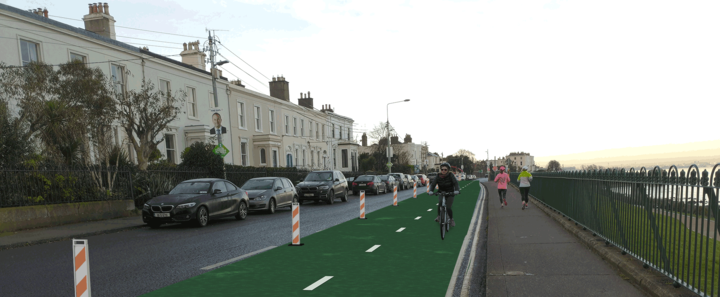 Cycle lane along coast from Dun Laoghaire to Blackrock (Booterstown)We need a safe place for our children and adults to cycle on the road for commuting to school and work. This would also provide for recreational cycling and people to enjoy the coast in a safe and peaceful manner. At the moment there is no continuous safe cycling for people in DLR. Most people currently don't cycle due to the dangerous nature of the roads in DLR. This could provide an impetus for cycling with a link all the way from Booterstown to Sandycove. There's been talk of a cycleway along the coast for over 20 years and still no sign of it.1,597 of 2,000 SignaturesCreated by Sean Barry
 -
 4 days a week in IrelandBetter productivity. More efficient usage of time Employee satisfaction Lower unemployment rates And most importantly it is better for the environment as we won’t produce as much greenhouse emissions.104 of 200 SignaturesCreated by Albert Murphy
 -
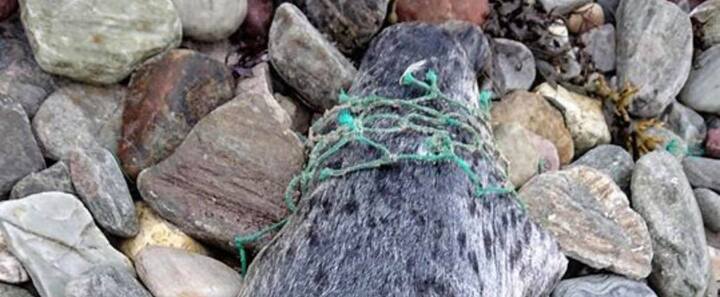 SAY NO TO SEAL CULLThere are two species of seals in Irish waters, the grey and the harbour seal but in recent years Artic visitors such as bearded, walrus and most recently a hooded seal have arrived on our shores. We have many things to learn about how seals use our coastline and these species are protected under the Wildlife Act, 1976 and its amendments and the EU Habitats Directive as they are important indicators of ecosystem health. Indeed the recent sightings of such northerly species have been a cause for concern and it is of interest that we monitor such important indicator species in a time when the planet faces climate crises and is undergoing the 6th Mass Extinction. Read more here: https://www.orcireland.ie/call-to-cull-seals-in-irish-waters and here: http://www.ecoevoblog.com/2019/03/05/seal-cull/712 of 800 SignaturesCreated by ORCA Ireland Ocean Research & Conservation Association
-
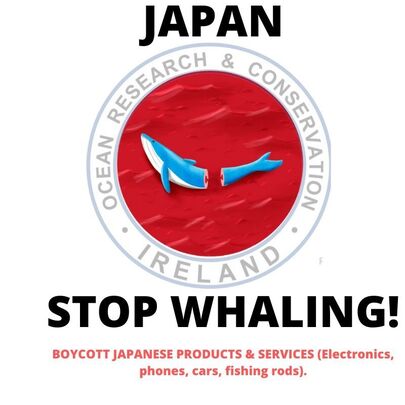 STOP COMMERCIAL WHALING NOW! Boycott Japanese Products and Services in the EU.It has been a devastating year for environmentalists and ocean advocates all over the world as Japan withdrew from the International Whaling Commission (IWC) on July 1st 2019 and re-commenced commercial whaling for the first time in over 30 years. For many years Japanese whalers hunted whales in Japanese and Antarctic waters under the guide if "scientific whaling", now although not fishing in protected waters of the deep southern ocean, they have began commercial hunting of whales in Japanese waters. In 2019, Japanese whalers killer 232 whales , including 187 Byrde's whales, 25 sei whales, and 11 minke whales. Despite global out-cry and a dwindling demand for whale meat consumption in the country, the Japanese government have now passed a law to fund commercial whale hunts and to promote the consumption of whale meat in schools, despite the meat being highly toxic and dangerous for human health. Read more: https://www.orcireland.ie/japanese-whalers-kill-223-whales-completing-their-first-hunt-in-over-three-decades Read more: https://www.orcireland.ie/japanese-government-to-fund-more-whale-hunts The slaughter of protected species like minke, Bryde's and sei whales are brutal and horrific, as whales are harpooned, sometimes with explosives. On contact with the animal, the harpoon spread open to prevent the whale from escaping and death is slow and excruciatingly painful. Whale populations around the world are facing a multitude of human impacts from plastic pollution to overfishing and entailments, the last thing the world's marine biodiversity needs is further over exploitation and abuse. Please SIGN our Petition to urge Japans Prime Minister, Shinzo Abe to STOP JAPAN COMMERCIAL WHALING to protect cetacean species in Japanese waters instead of slaughtering them for profit and boycott Japanese goods and services until they END WHALING. Please sign to urge Japans Ambassador Mitsuru Kitano to urge Japanese officials to END COMMERCIAL WHALE HUNTS in a bid to tackle the world's biodiversity loss crises! Join us for a protest outside the Embassy of Japan in Ireland, Dublin on February 13th to celebrate World Whale Day 2020.90 of 100 SignaturesCreated by ORCA Ireland Ocean Research & Conservation Association
-
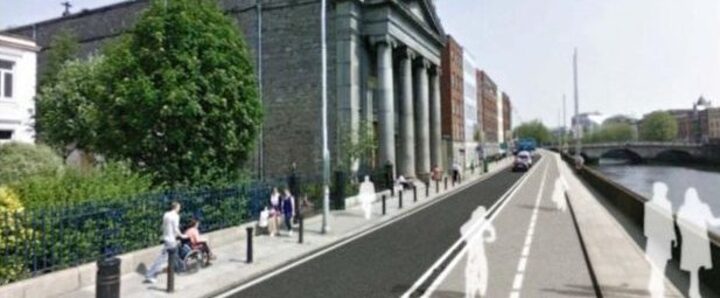 Trial a cycle path on Dublin’s quays in 2020Plans have been mulled for years to try to keep everybody happy. But an apparent solution made public in May 2019 includes removal of rows of trees, narrowing footpaths, interfering with historic bridge walls, and even the removal of some existing pedestrian crossings. And for what? The draft plans show a route which is not continuous, leaves people cycling exposed at junctions, and looks too narrow for current demand in cycling. Often a lack of funding is given as a reason for delaying projects, but the Liffey Cycle Route has mainly suffered an issue with “politics of space” — mostly a fear of removing cars from parts of the quays despite international examples showing that this is the way to go. This is as much about what kind of capital city Ireland wants as it is about cycling: A car-dominated city centre or enabling sustainable transport which is better for transport capacity, health, the local air quality, and even climate change -- which is better for local residents, business, workers and tourism. Cycling has increased in Dublin in the last decade but the creation of safe and attractive cycle routes has remained stalled long after economic recovery while at the same time extra lanes have been added to motorways near the city. Rather then keep spending years of planning each route, Dublin needs to start a quick-build network and there's no better place to start than the quays which connects so much of the city. We are asking that city and national authorities go back to the previous plan of continuous two-way cycle path on the quays to at least trial it for 8-12 months and then ask if people want to go back to the way things are now. MORE DETAILS: How a two-way cycle path on the north quays can be trialed -- Can Dublin #GreenTheQuays if it means disrupting car traffic?: https://irishcycle.com/2019/08/06/can-dublin-greenthequays-if-it-means-disrupting-car-traffic/ How the NTA’s plan for the Liffey Cycle Route is on the wrong path for Dublin’s future: https://irishcycle.com/2019/05/22/liffey-cycle-route-is-on-the-wrong-path-for-dublins-future/ Motor traffic around Dublin's River Liffey quays shocked international cycling experts https://irishcycle.com/2019/12/09/motor-traffic-around-dublins-river-liffey-quays-shocked-international-cycling-experts/ Liffey Cycle Route: Timeline and coverage: https://irishcycle.com/2019/12/10/liffey-cycle-route-timeline-and-coverage/4,462 of 5,000 SignaturesCreated by Cian Ginty
-
 Issue Michael creed minister for agriculture with p45Its extremely important that farmers take the time to sighn this petition , as I feel its the first step and only step in rectifying the great imbalances that farmers are experiencing, when we as independent farmers elect our own representative to hold position as minister for agriculture, then we as a farming community can work towards resolving farmers issues re instating farmers rights equality something that is being rashioned at present, we can resolve the great imbalances being experienced11 of 100 SignaturesCreated by Peter Curran
 -
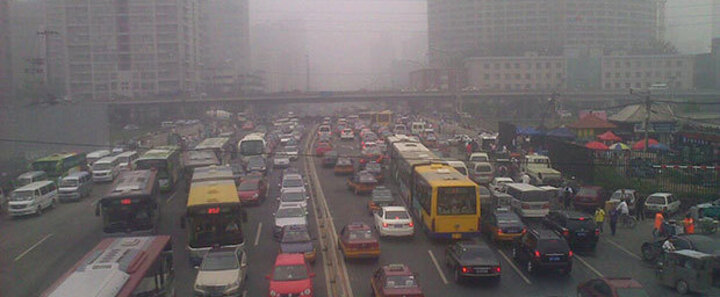 Call For A Phase-Out Of Gasoline-Powered VehiclesTransportation powered by gasoline and diesel fuel is America’s single biggest source of carbon emissions, contributing to warming temperatures on land and in the oceans, resulting in unprecedented natural disasters. Extracting, transporting, refining and using oil and gasoline causes harm to people, air, water, land, animals, and plants. Gasoline vehicle exhaust pollutes the air, causing asthma, heart and lung disease, cancer, dementia and thousands of premature deaths each year. Vehicle exhaust affects children, disadvantaged communities and communities of color the most, with disproportionate health, financial and quality of life impacts. In the past, we adopted reasonable vehicle regulations to require seat belts, airbags, catalytic converters, unleaded gas and other improvements to protect health and safety. It’s time to act again. Electricity is already viable as a clean alternative to gasoline. Costs to fuel and maintain an electric vehicle are already cheaper than for gas cars, and electric vehicle sticker prices are forecast to be cheaper by the mid 2020s. To protect public health, clean the air, slow a rapidly warming climate, and promote economic and environmental justice, we call on our local, state and federal government officials to ensure that, starting in 2030 or sooner, all new vehicles sold are clean, zero emissions vehicles, not gasoline or diesel vehicles.9 of 100 SignaturesCreated by Slava Digriz
-
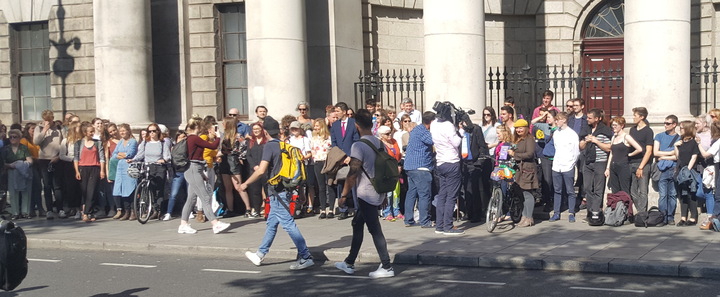 Access to JusticeVERY IMPORTANT to stop this legislation by Minister Murphy as it will effect our ability to take a court case/ judicial review. Environmental groups outline shock at proposed planning Bill. Proposed legislative changes would make it almost impossible for citizens and environmental groups to challenge poor planning decisions in the courts. Ireland’s leading environmental coalition is shocked at the Minister for Housing’s attempt to introduce new planning legislation that would make it near impossible to challenge planning decisions in the courts and hold public authorities and the Government to account. The Environmental Pillar – a coalition of national environmental organisations – learned over the weekend of worrying developments with the Housing and Planning and Development Bill 2019 that is being brought forward by Minister Eoghan Murphy TD. In sum, the proposed Bill will add numerous challenging requirements and restrictions that will make it very hard for ordinary citizens and environmental NGOs to achieve the necessary “standing” to take cases. The changes proposed in the Bill would also add to the complexity of the court process and increases the risks of exposure to significant costs to those seeking to challenge bad planning decisions. This legislation would row back on major changes introduced just a few years ago to enable ordinary people, their organisations, and environmental NGOs to challenge bad environmental decisions. Those changes were already long overdue and necessary to comply with EU law and the Aarhus Convention. The Heads of the Bill sent to the Joint Oireachtas Committee for Housing, Planning and Local Government last week are very blunt that the proposed changes are designed to make it more difficult to engage in the legal process and appears to favour developer’s interests at the cost of environmental rights. The most worrying aspects (some of which are further explored below) of the proposed Bill are: • Complete change to existing cost rules for environmental cases from a system where costs should “not be prohibitively expensive” to a cost cap rules system with court discretion. This exposes the public and eNGOs to much higher costs and uncertainty, ensuring that many will be dissuaded from bringing a case in the first place and makes it harder to engage lawyers • Change in standing rights requirements for applicants from “sufficient interest” to “substantial interest” and a requirement that they must be “directly affected by a proposed development” and “in a way which is peculiar or personal”. This is in addition to a new requirement that the applicant must have had prior participation in the planning process. • Extension of the minimum time that an NGO must be in existence before it can challenge a planning decision from 12 months to 3 years, thereby essentially ruling out newly established citizen-led NGOs concerned with local environmental issues from bringing challenges • Insertion of a new requirement that NGOs must have a minimum of 100 affiliated members, thereby ruling out the vast majority of Irish groups from bringing challenges. • Increased requirements for the “leave” stage (where you get court permission to challenge). The Heads of the Bill propose going back to the abandoned “on notice” system and adding to the tests and complexity of the leave – this adds to the costs, duration and difficulty of court proceedings. “This legislation would row back on major changes introduced just a few years ago to enable ordinary people and small but committed environmental NGOs to legally challenge bad environmental decisions, without fear of incurring eye-watering costs and extensive obstacles to accessing justice.” “The explanation for the Bill is blatant about making it harder to challenge decisions, with the Department arguing that challenges cause delays. It is bad decisions, and flawed legislation however, that are the real issue driving litigation in this country and this Bill does nothing to address that. “Given the context of costs in our Irish planning system, the size and nature of organisations and the costs in our courts, this Bill is an extermination of environmental democracy and oversight. It is particularly chilling that it comes at a time when environmental protection has never been more important, and citizens and groups are mobilising in a powerful Green Wave given the endless failures of this Government and administration.389 of 400 SignaturesCreated by Donna Cooney
 -
 Let Ken & Tarak go Home for XmasTwo members of Veterans For Peace, Ken and Tarak, were arrested on St. Patrick's day 2019 (March 17) for going onto the airfield at Shannon Airport carrying a banner that said: 'U.S. Veterans say Respect Irish Neutrality U.S. War Machine out of Shannon Airport Veterans For Peace' They wanted to demand that police inspect a U.S.-military contracted plane believed to be carrying U.S. troops and weapons on their way to illegal wars in the Middle East. These flights, which have been passing through Shannon Airport since 2001, are in violation of Irish neutrality and international law. The 2 men were charged with Trespass and Causing Criminal Damage at Shannon airport. After being held in Limerick jail for nearly 2 weeks, Ken Mayers and Tarak Kauff were released on €2500 bail each and forced to surrender their passports. They have been unable to return home for over 7 months. The High Court will not reconsider their application to change their bail conditions until they can show that their trial is years off, which will be the case with the current backup of cases in the Dublin Circuit Court. Changing their bail conditions is key to getting their passports restored. The process the 2 peace activists are being forced to endure is a clear attempt to punish them before any trial takes place. Major Ken Mayers served 12 years in the US Marine Corps. He is a former National Board member of Veterans For Peace and participate in veterans peace team delegations to Palestine, Okinawa, Jeju Island, South Korea, and Standing Rock. Tarak Kauff was a paratrooper in the US Army during the early sixties. He was a member of the VFP National Board of Directors for six years. He has organized veterans delegations to Palestine, Okinawa, South Korea and Standing Rock. He is currently the managing editor of Peace In Our Times939 of 1,000 SignaturesCreated by Galway Alliance Against War
-
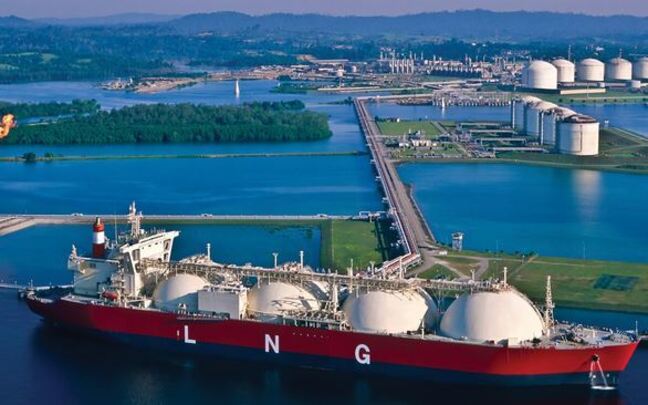 No to the Cork LNG terminalIn 2017, the Port of Cork signed a Memorandum of Understanding (“MOU”) with NextDecade, a liquefied natural gas (LNG) development company. The MOU allows the Port of Cork to negotiate with NextDecade on the development of a new Floating Storage and Regasification Unit (FSRU) and associated LNG import terminal infrastructure in Cork harbour. We are asking the Port of Cork to rescind this undertaking in the MOU for the following reasons: 1. Climate Change To keep global temperature rise below 1.5C and to avoid catastrophic climate change, fossil or “natural” gas must be phased out of the energy mix in Europe by 2035 [i]. Claims that gas is a “transition fuel” have been discredited ͥ[ii] and recent studies show that gas sourced through hydraulic fracturing, like 69% of all gas now produced in the United States ͥ[iii] and imported to Europe as Liquefied Natural Gas (LNG), is 44% more damaging to the climate than coal [iv]. Research also states that we can’t develop any new fossil fuel infrastructure from 2019 onwards if we are to have a 64% chance of limiting temperature rise to less than 1.5C [v]. 2. Fracking In 2017, fracking was banned in the Republic of Ireland due to its devastating health and environmental impacts [vi]. If the Cork LNG infrastructure is developed it will facilitate the importation of fracked gas from the planned NextDecade export terminals in the Rio Grande Valley region in Texas. Allowing this infrastructure would be hypocritical of the Republic of Ireland as it would have severe impacts on indigenous and marginalised communities in Texas. 3. Renewables and Energy Security The Cork LNG infrastructure would also have a considerable negative impact on the developing Irish renewable energy industry [vii]. The government has stated that LNG projects are necessary for the purpose of energy security [viii]. However, recent research shows that the rapid development of indigenous renewables combined with energy storage technology is the best way to achieve this [ix]. [i] Anderson, K. and Broderick, J. (2017) Natural gas and climate change, Manchester: University of Manchester Available: https://www.research.manchester.ac.uk/portal/en/publications/natural-gas-and-climate-change(c82adf1f-17fd-4842-abeb-f16c4ab83605).html [ii] Perez, A. (2018) Global Gas Lock-in: Bridge to Nowhere. Brussels:Rosa Luxembourg Stiftung [iii] US Energy Information Administration (2019) How much shale gas is produced in the United States? Available: https://www.eia.gov/tools/faqs/faq.php?id=907&t=8 Accessed 06.11.2019 ͥ[iv] Howarth, R (2019) Opening Statement to the Joint Committee on Climate Action. Dublin: Oireachtas. Available: https://data.oireachtas.ie/ie/oireachtas/committee/dail/32/joint_committee_on_climate_action/submissions/2019/2019-10-10_opening-statement-robert-w-howarth-ph-d-cornell-university_en.pdf Accessed 06.11.2019 ͮ[v] Smith, C. J., Forster, P. M., Allen, M., Fuglestvedt, J., Millar, R. J., Rogelj, J., & Zickfeld, K. (2019). Current fossil fuel infrastructure does not yet commit us to 1.5 C warming. Nature communications, 10(1), 101. [vi] Concerned Health Professionals of New York (2019) Compendium of Scientific, Medical, and Media Findings Demonstrating Risks and Harms of Fracking (Unconventional Gas and Oil Extraction) Available: https://concernedhealthny.org/wp-content/uploads/2019/06/Fracking-Science-Compendium_6.pdf Accessed 06.11.2019 [vii] Shakeb Afsah & Kendyl Salcito (2014). Shale Gas: Killing Coal without Cutting CO2 Available: https://co2scorecard.org/home/researchitem/28 Accessed 06.11.2019 Accessed 06.11.2019 [viii] The Green News “State confirms support of Shannon LNG project” Available: https://greennews.ie/state-support-shannon-lng-pci/ Accessed 06.11.2019 [ix] McMullin, B., Price, P., Carton, J., & Anderson, K. (2018). Is Natural Gas “Essential for Ireland’s Future Energy Security”? Dublin:Stop Climate Chaos3,729 of 4,000 SignaturesCreated by Not Here Not Anywhere - NHNA
.png)
-
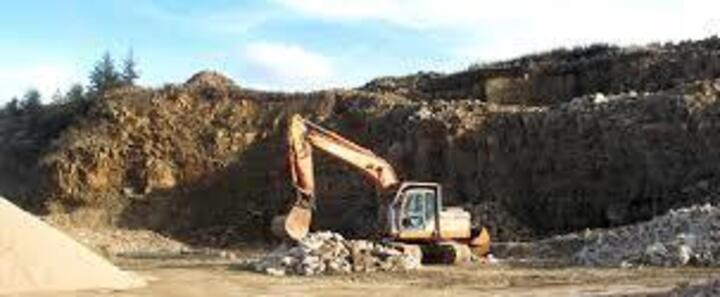 Stop new quarry in south KildareKilsaran have submitted an application Kildare County Council to start a new quarry in Racefield, Ballyshannon. This is a rural but buoyant neighbourhood that would be blighted if this application were to succeed. There are a lot of farmers in the local area that would be affected, as well as 3 national schools all within a few miles with 1 being only a mile away. It is this school that would be affected the most, as it is situated at the junction that the 70+ lorries per day would use and would be affected not only by the dust polution but elevated levels of exhaust fumes. We need your help in sending a signal to the council that this quarry is not wanted.220 of 300 SignaturesCreated by Iain Bright
Hello! We use cookies to save you time and show you more relevant campaigns. Need more information?