
-
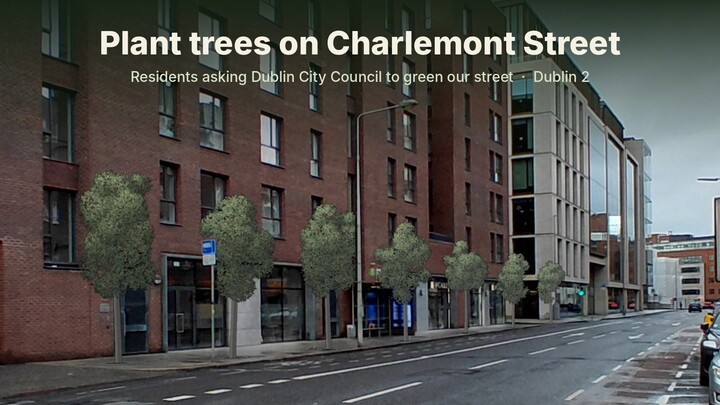 Trees for Charlemont StreetCharlemont Street has wide footpaths but not a single tree along this stretch: just brick, paving and traffic. Street trees would give shade on hot days, soak up rainwater, cut noise and make the street a calmer, greener place to live, work and walk. Dublin City Council has already planted trees in the North East Inner City and the Liberties, so we know it can be done here. The more of us who sign, the harder it is for the council to ignore. Add your name and help green Charlemont Street.9 of 100 SignaturesCreated by Tony Nicoletti
 -
 Ban LNG Terminals in Ireland: Sign open letter to Darragh O' BrienClimate impact LNG has a devastating impact on the climate because of the methane emissions released by fracking, cooling, shipping and regasifying it. It produces Greenhouse Gas (GHG) emissions 33% higher than coal and, using Robert Howarth’s research, Stop Shannon LNG has estimated that importing and using LNG in Ireland could produce double the greenhouse gas emissions of the pipeline gas we currently import. In a very cynical move, the legislation allowing for construction of the terminal - the Strategic Gas Reserve (SGR) Act - disapplies section 15 of the Climate Act. This means that relevant state bodies no longer need to have regard for ‘mitigating greenhouse gas emissions. Furthermore, the SGR Act doesn’t prevent the proposed project from increasing gas demand and consumption. Neither does it block the operation of the terminal by commercial operators or prevent the development of other LNG import terminals, such as the Shannon LNG project in Co. Kerry, which is currently awaiting a planning decision. Any LNG terminals built would lock us into a fossil fuel future. All this when you have already conceded, in a complete dereliction of duty, that Ireland will fail to meet its legally-binding carbon emissions reduction targets resulting in billions of taxpayer money in fines. The Energy Security Myth The proposed LNG import terminal is being framed as a necessary energy security measure, only to be used in ‘emergencies’. However, as explained in a recent article in the Clare Champion, this is a myth. LNG is completely unsuited to storage due to boil off and the proposed terminal would need to be emptied into the gas grid and refilled at least 6 times a year.. Supply of LNG is vulnerable to weather-related disruption and geopolitical instability. In March, a powerful tropical cyclone in Western Australia disrupted production at the country’s two biggest LNG plants run by Chevron. And global LNG flows out of the Middle East were upended earlier this year by Iran’s blockage of the Strait of Hormuz. Under the government's new Large Energy Users connection policy, gas demand for electricity generation could increase by 20% due to data centres. This would mean that if the data centres currently awaiting planning approval are given access to the gas grid, there could be a shortfall in Ireland’s gas supply of 9-18% during a period of severe cold. Evidently, an LNG terminal is not an energy security solution, rather it is being proposed to enable the continued, unsustainable growth of data centres. Real energy security for Ireland would mean indigenous renewable energy (particularly community owned), increased electricity storage and interconnection, demand management, demand reduction through energy efficiency and insulation measures and, crucially, a reduction in demand from data centres. Fracking and Public Health The US could supply 80% of the LNG imported to Europe by 2030. and Donald Trump is pressuring Ireland to buy US LNG. Meanwhile, you have engaged in talks with the Governor of New Mexico to discuss long term purchasing of US fracked gas. The vast majority of US LNG is produced by fracking, which was banned in Ireland in 2017 due to its adverse impacts on the environment and public health. Communities in the US where LNG is produced through fracking are suffering from respiratory illness, cancer, reproductive issues, blood related disorders in children and mental health issues. These issues disproportionately affect disadvantaged and poorer communities, and communities of colour. You must not allow Ireland to be complicit in this social injustice. Additionally, importing fracked gas would threaten our ban on fracking. Impact on Household Bills The proposed LNG terminal is estimated to cost taxpayers at least €900 million euro but could be far more. LNG itself is expensive and is likely to become far more expensive in the future. This will increase electricity bills, but nowhere in the legislation is there reference to this impact from the proposed development, nor has there been any cost-benefit analysis conducted. Furthermore, the proposed development, because of its massive climate impact, would make it more certain that taxpayers in this country will be on the hook for EU fines up to €26 billion. It would also mean rising economic costs from worsening storms and floods in this country, including rising insurance premiums. Security and Safety Risk Paul Griffiths, Chief Executive of Predator Oil and Gas, said he would never live beside an LNG import terminal because of the risk of explosion. Floating LNG terminals, like the one being planned on your watch, are very vulnerable to attack and disruption. Just this summer, a US-owned LNG import terminal was attacked by a drone in Egypt, with the fire spreading to an LNG tanker. These massive safety and security risks have not been addressed. As you must be well aware as Minister for Climate, LNG terminals, with their climate impact, also increase risk of floods, wildfires and sea-level rise, drought, food shortages, migration and geopolitical unrest. Undemocratic process You tried to block pre-legislative scrutiny on the SGR Act which paves the way for the proposed LNG terminal. Nonetheless, the Joint Oireachtas Committee for Climate, Environment and Energy identified a wide range of problems with the Act and made 43 recommendations in their Pre-Legislative Scrutiny Report. Almost none of these have been implemented. Now the Act gives you the authority to grant approval instead of An Comisiún Pleanála, even if the project is likely to have adverse impacts on a European site (e.g Natura 2000 site), a priority habitat or a priority species.You are also yielding to pressure from the US to enter into agreements with them on importing their fracked gas, thereby supporting their “America First”, “drill baby drill” policy, and undermining democracy world-wide. There is simply no scenario that justifies the construction of an LNG terminal in Ireland in this climate crisis. We, the undersigned, urgently call on you to abandon this project, ban LNG import terminals and accelerate Ireland’s transition to a just, fossil-fuel-free energy system.919 of 1,000 SignaturesCreated by Stop ShannonLNG
 -
 Stop data centre development in KildareLand beside our homes is zoned exclusively for hyperscale Data Centres. Two areas near Jigginstown and the M7 are zoned “P - Data Centre Only” in the Naas Local Area Plan (shown in purple below). The M7 Business Park site already has planning permission - granted by Kildare County Council and now under appeal to An Coimisiún Pleanála. The Jigginstown site, which backs directly onto Primrose Garden, has no planning application yet. Once an application is lodged, it becomes more difficult to stop - that’s the lesson from the M7 site. Do you want to live this close to a data centre? WATER We’re currently living under a nationwide hosepipe ban and data centres are exempt from it. As commercial users, they can keep using water throughout. Data centres nationally have used over 1.7 billion litres of public water since 2024, and Uisce Éireann itself admits it can’t fully explain its own figures. CLOSE TO WHERE WE LIVE This land is next to homes, schools and horse studs. The Jigginstown site alone is over 7 times the area of Croke Park. Even with mitigation, developments this size bring 24-hour noise, lighting and years of heavy construction traffic. ELECTRICITY Data centres are already 21% of Ireland’s electricity. More data centres mean more pressure on the grid, more gas-fired backup power, and higher costs for all of us as billpayers and taxpayers. OUR ENVIRONMENT Ireland’s climate commitments have changed significantly since 2021 – grid capacity, water resilience and our carbon budgets are all under far more pressure now. If Ireland misses its EU climate targets, taxpayers pay the fines.62 of 100 SignaturesCreated by Nicolò Wojewoda
-
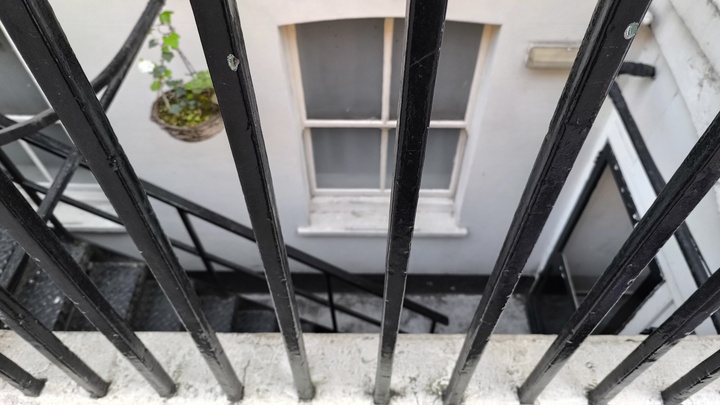 Time for a truthful account of the death of Celia de Jesus!On 24th October 2011, Irish citizen and hospice worker Celia de Jesus lost her life during a major flood event in Dublin. Unable to exit her basement flat as floodwater quickly rose at her door, she was trapped and drowned. In his report, the Dublin District Coroner of the time argue that Celia de Jesus drowned “as a result of a surge of water and flooding over a short period of time following two days of heavy rain”, reaching a final verdict of “death by misadventure”. However, extensive research into the tragic event reveals that the coroner report omits several pieces of evidence clearly challenging the conclusion of the report. Two of the main pieces of evidence left out of the report are as follows: • EVIDENCE 1: Celia de Jesus’s landlord had not received planning permission to divide the basement of his property into two rental units. Celia de Jesus was therefore renting an unauthorised basement flat. Furthermore, while located in a well-known flood-prone area, the basement flat had only one means of exit, the entrance door. All windows of the flat were blocked with metal bars. When Celia de Jesus was unable to open her entrance door for unknown reasons, she had no other means of exit at her disposal and was trapped. These pieces of evidence are never explicitly mentioned in the report and never outlined as a major cause of the tragic death. Instead, the claim is made that the works to divide the basement into two rental units (“appear to”) precede the Building Control Act 1990 and that, as a result, they shall be deemed to have been permitted. However, such a legal technicality cannot justify entertaining a misleading account of the tragic death. • EVIDENCE 2: In the coroner report, a list of planning applications submitted for the property in which Celia de Jesus died, both granted and refused, is provided. However, one planning application, dated 2009 and refused, is not included in the list. In this planning application addressed to Dublin City Council, it is stated that the property in which Celia de Jesus lived and died is “not of a habitable standard” (architect report, planning application 3066/09). Despite such a concerning statement, the issue failed to be addressed, which constituted another significant enabler of the tragic event. Following the tragic event and until now, various state and local government agencies, among them Dublin City Council, South Dublin County Council and the Office of Public Works, have actively sustained the misleading account of Celia de Jesus’s death in reports and during public meetings. Instead of mentioning the planning breach and institutional failure that led to the tragic death, they consistently and unliterally blamed the flood. The misleading account was widely relayed in the local and national press and among local communities. As we are now approaching the fifteenth anniversary of the tragic death, we ask Dublin City Council, South Dublin County Council, the Office of Public Works and the Minister for Justice to take the following actions as a matter of urgency: • ACTION 1: Issue a public statement explaining the full circumstances of the death of Celia de Jesus based on all available evidence • ACTION 2: Issue a public apology for having sustained a misleading account of the tragic death • ACTION 3: Request an immediate review of the coroner report and of its final verdict Please sign the petition to support these demands and share as widely as you can thank you!103 of 200 SignaturesCreated by Laure De Tymowski
 -
 Object to another Starbucks in GalwayGalway's traffic is bad enough. Adding another drive-thru at one of the worst junctions in Galway City for traffic will only make things worse.2,611 of 3,000 SignaturesCreated by Galway Commuter Coalition
-
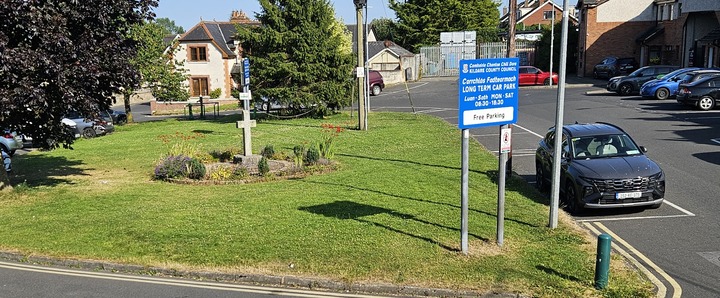 Save the Kilcock Fair GreenIrish Rail / Iarnród Éireann have plans to tarmac the Fair Green to create an additional 20-30 car spaces for the new Dart Plus Rail Route. Kilcock Heritage & Historical Society hopes to protect the Fair Green as it holds immense historical weight. The Fair Green was the site of a famous market for centuries that drew people from far and wide. During the 1798 Rebellion, rebels were executed on the Fair Green and the government military barracks located in picture where current 1798 stone marks it on the Green was destroyed. Additionally, the centre of the Green features the Kilcock Market Cross, which was itself torn down by Yeomen in 1798 and beautifully restored by the town in 1999. Kilcock Heritage & Historical Society have plans to implement heritage storyboards detailing the history of the Fair Green and the 1798 rebellion in the Kilcock area. In addition, we hope to have a bronze monument to commemorate the people who died in the area which culminated in the Battle of Ovidstown of which over 224 people were killed a few fields west of Kilcock. It also acts as a beautiful green space for residents and kids. No other European country would allow a civic space like this to be destroyed and neither should we. Kilcock Heritage & Historical Society in no way intends to obstruct, impede or block Irish Rail and the much needed rail upgrade. We merely hope that they reconsider the value of the Fair Green and ensure its protection for centuries to come.330 of 400 SignaturesCreated by Kilcock Heritage
 -
 Save Our Postal Depots!Local communities rely on An Post to deliver accessible services. Currently, there are three Delivery Service Units (DSUs) in Dublin South Central, located at Dolphin's Barn, Crumlin, and Ballyfermot. These are the depots where people who live in Dublin 8, 10 and 12 go if they need to collect a package. Under new plans from An Post, these DSUs will be moved out of their local areas, and relocated to a single 'superhub' in Lucan. This will be disastrous for both residents of Dublin 8, 10 and 12, and the postal workers providing a vital service for these communities. For local residents of Dublin 8, 10, and 12, they will now have to travel to Lucan just to pick up their missed packages. For locals of Rialto, Crumlin, and other areas, this could mean hours on public transport, or stuck in traffic. For anyone with caring responsibilities or disabilities, making this commute will just not be possible. For An Post's own workers, these changes will result in degradation of their working conditions. Many of these workers have built their lives around where they work, but are now being told that that they will need to make long commutes on a daily basis, just to carry out their role of providing a vital service for their local communities. These longer commutes will also result in routes not being finished. If a postal worker gets stuck in traffic between Lucan and Ballyfermot, for example, they will not be able to complete their route, and will have to return undelivered packages to the superhub in Lucan. Moreover, the environmental impact of this change cannot be overlooked. Increased travel distances mean more traffic congestion and higher carbon emissions, contributing to pollution and climate change—concerns that should be at the forefront of our decision-making processes. We are calling on An Post to drop these plans immediately. These changes will be disastrous for the residents of Dublin 8, 10 and 12, and the postal workers that service those communities. Instead of relocating these services out of local communities, we call an An Post to invest in improving the existing facilities in Dolphin's Barn, Crumlin, and Ballyfermot. Postal services are a vital community infrastructure, and they need to stay in communities.2,072 of 3,000 SignaturesCreated by Hazel De Nortúin
 -
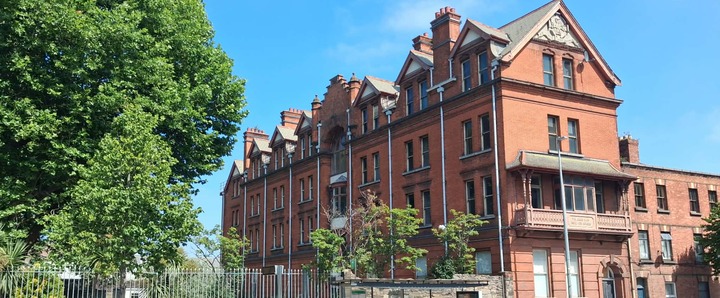 Keep The James Weir Home on Cork Street, D8 in public handshttps://cdn.uplift.ie/assets/uploads/2025/07/MyUplift-banner-politician-SVG-1-scaled.png The South West Inner City area of Dublin has a chronic shortage of community spaces and community facilities. The area around Cork Street in particular has seen a huge increase in hotel and other short-term rental developments. There is tangible evidence that the local community has been squeezed out. "A Socioeconomic Analysis of Dublins South West Inner City" from Barra Rowntree (Trinity College) found that Third-level progression rates locally are less than half of the national average, that average incomes are substantially lower than Dublin as a whole, and the number of drug poisoning deaths per capita is at least twice the national average, though is likely higher. The report concluded that "The concentration of disadvantage in parts of the SWIC provides a compelling case for additional targetted investment", and in particular pointed towards investment in education and physical activity for young people. The James Weir Home for Nurses on Cork Street is owned by the HSE. The HSE have offered to give it to DCC free of charge so it can be used for community purposes.386 of 400 SignaturesCreated by Cllr. Ciarán Ó Meachair
 -
New skatepark tullamore offalyOther people should join me in this campaigne because there has been many issues lately with the tullamore skate scene as the park is an unsafe place and the skatepark no longer feels like a fun place to learn to skate there is many skaters in tullamore and only one skatepark is no longer enough134 of 200 SignaturesCreated by Jack pidgeon
-
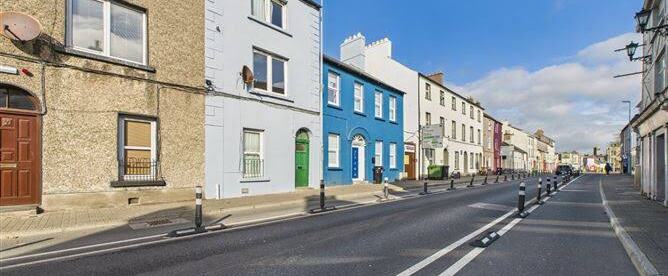 Re-instate cycle lane protections on Manor Street, WaterfordManor Street is a one-way street for cars heading into the city centre from the Cork Road direction. It has two cycle lanes, one to the left of the carriageway and a contraflow cycle lane on the right, to allow cyclists travel in the opposite direction to vehicular traffic. Until recently, both of these lanes had temporary plastic bollards marking them out, and separating cyclists from vehicular traffic. Two weeks ago, the temporary plastic bollards were removed from the Manor Street cycle lanes in Waterford by Waterford City and County Council. The Council has not published any plans for upgrading the cycle lane surface, and there are no plans for Manor Street in the Council's 2026 Active Travel plan. While the bollards offered limited physical protection, they made a big difference to the safety of cyclists using the lanes by clearly marking the edges of the cycle lane and creating a visual barrier. While the bollards may have been an inconvenience to drivers who expect to be able to pull into the kerb (and even onto the footpath), they made the street somewhat safer for cyclists. They also helped to prevent the dangerous practice of cars parking in the cycle lane and blocking it. Waterford Bicycle Users Group (a local group of the Irish Cycling Campaign) wants these bollards reinstated and a plan for upgrading the cycle lanes on Manor Street to be included in the 2027 active travel schemes.103 of 200 SignaturesCreated by Waterford Bicycle Users Group
 -
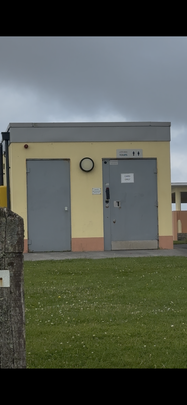 Galway, Claddagh, Long walk & Grattan beachProviding clean, accessible public toilets will improve public health, enhance visitor experience, support local tourism, protect the environment, and improve the quality of life for residents who use these areas daily.20 of 100 SignaturesCreated by Michael Ryan
 -
Price Controls, Not Data CentresJust last year JCD Developments got extended planning permission to expand the Data Centre site in Little Island. This comes at a time of record high electricity bills, which are now some of the highest in Europe. As well as this, as of 2025, 22% of the Irish Electrical grids output goes straight to Data Centres. We need to stop prioritising the economic interests of big tech companies over the right of Irish workers to affordable electricity, clean water and a sustainable future for their children. So join us as we take the fight to the tech oligarchic's and put an end to their profiteering in Cork.87 of 100 SignaturesCreated by Little Island Says No To Data Centres
Hello! We use cookies to save you time and show you more relevant campaigns. Need more information?