
-
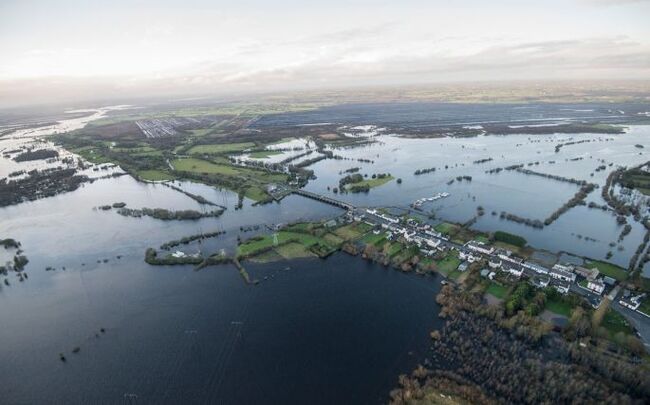 More than sweeping brushes - support for communities at risk of floodingAs a family, we have experienced two major flooding incidents - our family home in Galway in September 2015 and my mother's home a number of years ago - followed by a near escape over Christmas in my mother's home. In the days following Christmas, we witnessed elderly people and families using sweeping brushes and wheelie bins to bail water in an attempt to protect their homes, homes that had already been destroyed a few years earlier. The impact on other communities around the country was, in this instance, far worse. Flooding, and the fear of it that permeates communities prone, is life -destroying. People need to be equipped and supported to protect their homes and businesses. The inevitability of these events needs to be conceded and the promises of action that we have been hearing needs to happen now. In terms of crisis response (prevention is a whole other story) in the immediate term; • There needs to be local co-ordination and a crisis response plan in areas that are prone to flooding, including a text alert system to people willing to help; • There should be a store of sand-bags in these areas. Easy-to-store sand-bags (five in a box about the size of a lap-top box) are now available, but these are generally distributed far too late. In our own case we got a delivery of sand-bags the day after the flood. That evening a local politician sourced them and while it wasn’t too late, it would have been far better if they had been available earlier; • At one stage the fire brigade brought a small pump and generator and this cleared the water out of the worst affected homes in a few minutes – work that had taken us all night. These should be available in all flood prone areas and training provided to local people to be able to use it; • People in these areas should receive grants to install flood-barriers – these work unless the flood is overwhelming; • Guarantees that either insurance companies will be required to provide flood insurance or a national insurance fund is established.328 of 400 SignaturesCreated by Ann Irwin
 -
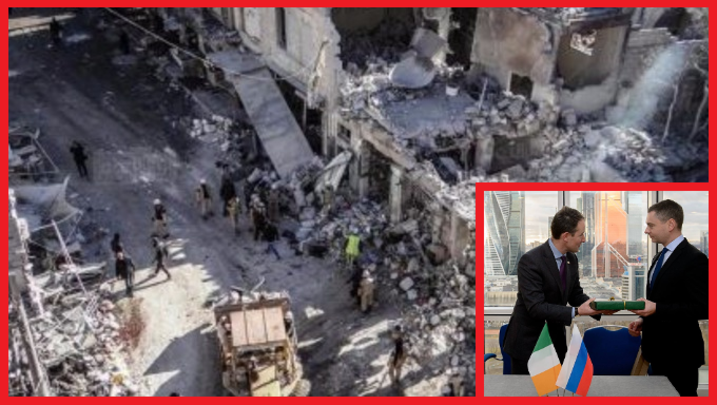 Maintain the Sanctions Against Russian War CriminalsIn spite of E.U. sanctions against Russia for their role in destabilising Ukraine and annexing parts of the country, on December 7th, 2015, a 16-strong trade delegation led by Minister of State Sean Sherlock under the auspices of the Joint Economic Commission – Russia/Ireland, went to Moscow "to build on our existing excellent relationships"(1). Meanwhile Russia is bombing and killing hundreds of innocent civilians in Syria. According to the respected Syria Network for Human Rights, Russian airstrikes since September 30th until December 1st, 2015, have targeted markets, mosques, bakeries, killing 583 individuals - 570 of whom were civilians, including 152 children and 60 women. A recent report from Human Rights Watch also highlighted Russian extensive use of cluster bombs (2). The Convention on Cluster Munitions which banned their use under any circumstances, was actually adopted in Dublin on 30th May 2008. Their use also violates United Nations Resolution 2139 which demanded that all parties involved in Syria end “indiscriminate employment of weapons in populated areas" (3). Russia also vetoed a UN Security Council resolution to refer the situation in Syria to the International Criminal Court (4). The Amnesty International report of December 23rd, 2015, in effect corroborates and elaborates on the substance of these earlier (SNR, HRW) reports in laying out egregious violations of human rights and international law perpetrated by the Russian military. Please sign this petition to ensure that our government does not support the lifting of current E.U. sanctions against Russia when they are due for renewal. 1. http://www.intellinews.com/irish-government-gets-primed-for-lifting-of-sanctions-against-russia-86361 Irish government gets primed for lifting of sanctions against Russia 2. https://www.hrw.org/news/2015/12/20/russia/syria-extensive-recent-use-cluster-munitions Russia/Syria: Extensive Recent Use of Cluster Munitions 3. http://www.un.org/press/en/2014/sc11292.doc.htm Security Council Unanimously Adopts Resolution 2139 (2014) to Ease Aid Delivery to Syrians, Provide Relief from ‘Chilling Darkness’ 4. https://www.bbc.com/news/world-middle-east-27514256 Russia and China veto UN move to refer Syria to ICC38 of 100 SignaturesCreated by Tricia Lynch
 -
 Keep Donald Trump out of IrelandFollowing Donald's Trump's anti-immigrant position, we, as a nation of emmigrants, cannot allow such ignorant and hateful actions which inspire fear and hatred as well as justified anger. We are part of EU and we are on the front-lines at the moment. We must welcome ALL people no matter their religion/beliefs as long as they are not out to harm others or incite hate. I am starting this campaign because Donald Trump is an inciter of hate and fear and should not be allowed a stage to cause further divisiveness among peoples of the world. Therefore, I am asking you to sign this petition to ban Donald Trump from being allowed to visit The Republic of Ireland for any reason.1,980 of 2,000 SignaturesCreated by Jon Sheehan
-
.jpg) Correct contact details for Dental and Orthodontic Services in Dublin WestParents often need to use the emergency clinic for their children. Not being able to find out where to go or to be able to get through is really frustrating.27 of 100 SignaturesCreated by Stephen O Brien
Correct contact details for Dental and Orthodontic Services in Dublin WestParents often need to use the emergency clinic for their children. Not being able to find out where to go or to be able to get through is really frustrating.27 of 100 SignaturesCreated by Stephen O Brien -
Students for a Sustainable Ireland: Ban Data Centre ExpansionIreland now hosts 107 operational data centres, nearly all of which take electricity from our national grid. In 2025, Ireland’s data centres consumed 23% of the country’s metered electricity, surpassing the combined usage of all urban homes (18%) and doubling that of rural households. Just a decade ago, in 2015, they used only 5% (CSO, 2025). For context, the average data centres share of electricity across Europe is about 2.7%, meaning Ireland’s data centres use over eight times the EU average. Between 2015 and 2023, Irish households paid an extra €715 million in electricity bills; money that could have been spent on essentials like food, housing, or retrofitting homes (Friends of The Earth, 2026). This isn’t just an energy crisis, it’s a cost-of-living emergency, with ordinary people forced to subsidise the profits of Big Tech while our climate and wallets pay the price. This past year, Europe has faced extreme weather (record heatwaves, wildfires, droughts, and floods) highlighting the urgent need to reduce greenhouse gas emissions. Research from University College Cork (UCC) highlights that the rapid expansion of data centres has outpaced the growth of renewable energy in Ireland, effectively cancelling out emissions reductions achieved through clean energy projects. Instead of using clean energy to power homes, hospitals, and schools, our resources are being diverted to fuel the corporate profits of data centres. How can the Government claim to lead on climate action while expanding an industry that directly contradicts it?1 of 100 SignaturesCreated by Caoimhe Finnegan
-
Keep our life line and oceans clean and free from money grabbing investorsIt’s important because we’re talking about our eco system, children’s health and the soul of a community1 of 100 SignaturesCreated by Maryann Sanchez
-
Open Dog Park in TogherGreat addition for the community. Connect people.1 of 100 SignaturesCreated by Grace O'Driscoll
-
Water tap for dogs at kilboget parkDogs are running around playing with other dogs or with a ball and they need a drink and not everyone brings bottles around for them1 of 100 SignaturesCreated by Billy Williams
-
Scrap the 8-Year Citizenship ExtensionIn September 2026, the Irish Government announced plans to overhaul Ireland's citizenship laws, proposing an increase in the general naturalisation requirement from 5 to 8 years. Moving the goalposts by 3 additional years harms hundreds of thousands of people who have lawfully built their lives, careers, and families in Ireland. Undermining Fair Integration: Citizenship is the foundation of full civic, political, and social participation. Forcing long-term legal residents—including healthcare workers, tech specialists, teachers, service staff, care workers, and their families—to wait 8 years on temporary permissions delays their ability to fully integrate and contribute to the democratic life of the State. Going Against International Best Practice: While the Department of Justice claims this aligns Ireland with European standards, major EU nations are moving in the opposite direction. In 2024, Germany reduced its naturalisation timeline from 8 years to 5 years specifically to attract and retain global talent. Furthermore, the EU Long-Term Residence Directive sets 5 years as the benchmark. Extending Ireland's timeline to 8 years makes the country less competitive and less welcoming. Damaging Economic and Community Stability: Migrants fill critical roles across public services, hospitals, technology hubs, and local businesses. Thousands made life-altering decisions—relocating families, buying homes, and turning down opportunities in other countries—relying directly on the 5-year statutory process published by the Irish State. Changing these rules harms Ireland’s reputation as a fair and stable place to live and work. Our Demands: We respectfully call on the Minister for Justice and the Oireachtas Joint Committee on Justice during the Pre-Legislative Scrunity (PLS) phase to: Withdraw the 8-Year extension and maintain the existing 5-year reckonable residence requirement for naturalisation under Section 15 of the Irish Nationality and Citizenship Act 1956 (as amended). Guarantee Transitional Protections: Ensure that any future legislative changes include an explicit grandfathering clause to protect all current legal residents holding valid immigration permissions (Stamp 1, Stamp 1G, Stamp 4, and dependent permissions). Keep Pathways Accessible: Ensure that proposed language and civics requirements do not create socio-economic barriers to citizenship for lower-income workers or vulnerable groups. Ireland thrives when everyone who contributes to society is given a clear, fair, and achievable path to full citizenship. We urge the Government to reconsider this proposal and protect the 5-year pathway.14 of 100 SignaturesCreated by Mahamadanas Saiyed
-
Say no to Apcoa clamping in ParkleighWe believe Parkleigh residents should have a voice in decisions that will have a direct and potentially significant impact on everyday life within our community. We are asking Cairn, the OMC Board and Cushman & Wakefield to listen to the residents of Parkleigh and say no to the introduction of APCOA clamping.2 of 100 SignaturesCreated by Melissa Kearney
-
Ireland: Oppose Glorification of War Criminal Ratko MladicWho was Ratko Mladić? Ratko Mladić was the military commander of the Bosnian Serb forces during the war in Bosnia in the 1990s. He was convicted by an international court of genocide, crimes against humanity and war crimes. His crimes included responsibility for the Srebrenica genocide in July 1995, when more than 8,000 Bosniak Muslim men and boys were systematically killed after the town fell to forces under his command. These are not disputed allegations. They are findings of an international criminal court. Why are we petitioning now? Following Mladić’s death, he has been publicly honoured and celebrated in Serbia. The concern is not simply that individual Serbian citizens admire him. The far more serious issue is the involvement of political figures, public institutions and nationalist movements in treating a man convicted of genocide as a national hero. For a country seeking membership of the European Union, this should be unacceptable. European integration after the Second World War was built on the principle that countries must confront the darkest parts of their history rather than celebrate those responsible for atrocities. A state cannot credibly ask to join that political community while glorifying a commander convicted of genocide. What does this have to do with Ireland? Serbia is currently negotiating to become a member of the European Union. EU membership is not automatic. Every candidate country must meet political and legal standards before it can join, and existing EU member states — including Ireland — have a say in whether accession negotiations move forward. Ireland therefore has both a voice and a responsibility. This petition asks Ireland to use that voice. We are asking the Irish Government to state clearly that Serbia’s accession process should not advance while its government and political institutions tolerate, endorse or participate in the glorification of Ratko Mladić. What we are asking for We call on the Irish Government, the Minister for Foreign Affairs and Ireland’s representatives within the European Union to: 1. Oppose the opening of any further accession clusters or chapters with Serbia, including Cluster 3, until the Serbian Government clearly and publicly distances itself from the glorification of Ratko Mladić and other convicted war criminals. 2. Oppose the provisional closure of existing negotiating chapters while Serbian state institutions or senior government representatives participate in, endorse or facilitate the glorification of convicted war criminals. 3. Support the European Parliament’s position that Serbia’s accession process must remain genuinely merit-based and that negotiations may be frozen where there is backsliding on fundamental European values. 4. Call on the Serbian Government to recognise and respect the final judgments of international courts concerning Ratko Mladić, including his convictions for genocide, crimes against humanity and war crimes. 5. Call on Serbian state institutions and senior public officials to publicly reject the portrayal of Ratko Mladić as a national hero and to refrain from providing state honours, state resources or official participation in events glorifying him. 6. Ask the European Commission to treat the glorification of convicted war criminals as a measurable issue when assessing Serbia’s progress towards EU membership. A European future for Serbia should remain possible. But progress towards EU membership should require Serbia’s political leadership to make a basic choice: whether it wishes to honour the victims of genocide and accept the judgments of international courts, or glorify the men convicted of committing those crimes. It should not be possible to do both. Ireland should take a stand Ireland has consistently presented itself internationally as a country committed to human rights, international law and peaceful resolution of conflict. Those principles mean little if they carry no consequences. When a state seeking EU membership glorifies a man convicted of genocide, the appropriate response cannot simply be expressions of concern followed by business as usual. Ireland should oppose further progress in Serbia’s EU accession negotiations until that glorification ends. A country seeking membership of the European Union should not celebrate a convicted genocidaire as a national hero. We ask the Irish Government to say so clearly — and to act accordingly.1 of 100 SignaturesCreated by Kevin Keane
-
Say No to APCOA Clamping in Parkleigh• It directly affects residents people could be clamped and charged for parking in areas they may currently use without realising the rules are changing. • There hasn’t been wider resident consultation the decision appears to have been agreed between Cairn/OMC directors rather than discussed with the wider membership. • There may be better solutions clearer signage, designated parking, warnings and targeted enforcement could address genuinely dangerous parking without immediately introducing estate-wide clamping.1 of 100 SignaturesCreated by Lorna McEvoy
Hello! We use cookies to save you time and show you more relevant campaigns. Need more information?