
1,000 signatures reached
To: Martin Heydon TD, Minister for Agriculture, Food & the Marine; Timmy Dooley TD, Minister of State for Fisheries & the Marine; Donegal TDs — Charlie McConalogue, Pearse Doherty, Pádraig Mac Lochlainn, Pat “The Cope” Gallagher, Charles Ward.
Refuse Aquaculture and Foreshore Licence Application T12-462A in Lough Swilly
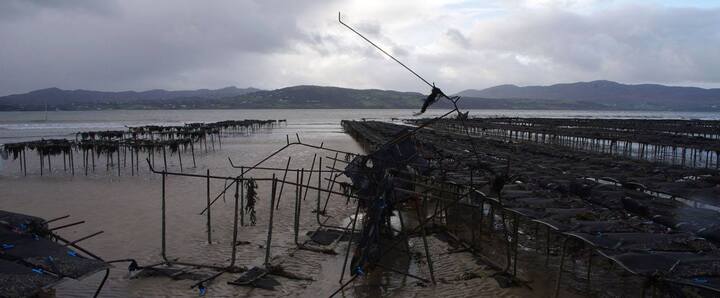
We are asking the Minister and the Department of Agriculture, Food and the Marine to refuse Aquaculture and Foreshore Licence Application T12-462A in Lough Swilly.
Lough Swilly is one of Donegal’s most valuable natural assets. It supports protected wildlife, provides daily recreational space for local residents, and plays an important role in tourism and the wider local economy. Any development of this scale must clearly demonstrate that it will not harm the environment, public safety, or the long-term character of the area. At present, that has not been convincingly shown.
In particular:
- The proposal is large in scale and would significantly increase the footprint of oyster farming in this part of the lough.
- Lough Swilly is a protected area for birds, and there are serious concerns about disturbance and loss of feeding habitat.
- There are already known issues with invasive Pacific oysters in the lough. This application is not restricted to sterile (triploid) oysters, which increases the risk of further spread of non-native breeding populations and long-term ecological damage.
- The cumulative environmental impact of multiple aquaculture sites across the lough has not been clearly addressed.
- The visual and amenity impact on a scenic coastline used daily by residents for walking, swimming, sailing and other recreation, and promoted as part of Donegal’s tourism initiatives, raises serious concerns. Lough Swilly is central to the county’s reputation as an unspoilt coastal destination, and this proposal risks undermining that image and economic value.
- There are concerns about damage to fragile sand dune systems along the shoreline, which are important habitats and provide natural coastal protection. Increased activity and structural development risk further degradation of these sensitive areas.
- Marine debris associated with aquaculture equipment is already found along parts of the shoreline on a regular basis. Further expansion increases the risk of plastic waste, storm displacement of equipment, and long-term environmental pollution.
- Public safety, navigation and environmental protection measures require much stronger guarantees. There have been injuries associated with these oyster trestles in the past, and no clear evidence of adequate public liability insurance has been provided with this application.
For these reasons, I believe the precautionary principle should apply. Unless it can be clearly demonstrated that this development will not negatively affect wildlife, water quality, public safety, tourism or the natural character of Lough Swilly, the application should not be approved.
Why is this important?
Lough Swilly is not just a stretch of coastline — it is a shared natural resource that belongs to the whole community. It supports protected bird species, fragile sand dune habitats, daily recreational use, and a tourism economy that many local families and businesses depend on.
Once large-scale development is approved in protected coastal areas, it is extremely difficult to reverse. Decisions made now will shape the future of the lough for decades. If the wrong balance is struck, we risk long-term ecological damage, further spread of invasive Pacific oysters, loss of amenity, increased marine debris, and harm to the natural landscape that defines this part of Donegal.
It is also important because the first application was not widely known within the community, and many local residents did not have an opportunity to make their views heard until after it had already been accepted. Public participation is a fundamental part of environmental decision-making. Communities should be properly informed and given a fair chance to engage before decisions are made — not after.
This is about ensuring transparency, fairness and proper protection of a designated and valued coastal environment.