
10 signatures reached
To: Micheál Martin - Taoiseach, Norma Foley - Minister for Children, Disability and Equality, Emer Higgins - Minister of State at the Department of Children, Disabilty and Equality.
Close the Loopholes: Make Accessibility a Right, Not a Favour
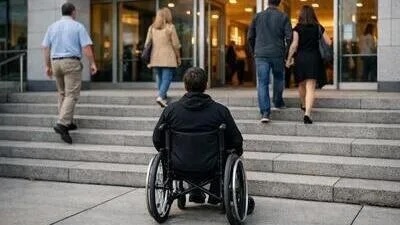
Close the loopholes in Irish law and make accessibility a legal requirement in every public-facing building, workplace, and public service.
Why is this important?
Across Ireland, people with disabilities are still being shut out of buildings and services that are open and working for everyone else. They are told “we can’t afford it,” “the building is too old,” or “we can’t let you upstairs.” But the real problem is not just bricks and mortar. It is a legal and policy system that still allows too many businesses and public bodies to delay, deflect, and do too little. Ireland has equality and human-rights obligations in this area, including under the UN Convention on the Rights of Persons with Disabilities.
As a lifelong wheelchair user for over 30 years, I have witnessed firsthand the discriminatory practices of both businesses and government bodies when it comes to making the built environment wheelchair accessible. Despite Ireland’s domestic and European equality and accessibility obligations, these bodies still exploit loopholes in the law — particularly phrases like “nominal cost” and “as far as practicable” — to sidestep real action. The result is persistent accessibility barriers that have a profound negative impact on people with disabilities, denying equal access to public spaces, workplaces, and essential services.
Accessibility is not a special request. It is part of the equality and human-rights standards Ireland already claims to uphold. Yet in practice, the law still leaves major gaps. In employment, there is a stronger reasonable-accommodation / disproportionate-burden framework. In goods and services, providers can still rely on the “nominal cost” limit in the Equal Status Acts. And on the public side, the Disability Act still uses the phrase “as far as practicable” for public buildings, which has too often allowed delay instead of delivery.
The system is also too fragmented. Most equality complaints go through the Workplace Relations Commission, but licensed-premises and registered-club cases follow a different route. That means the burden still falls too often on people with disabilities themselves to fight exclusion one complaint at a time.
And this issue is not only about customers or service users. Inaccessible buildings can also lock people with disabilities out of recruitment, work, training, and career progression. Employers already have legal duties in this area, including around adapting premises, but access should not depend on luck, goodwill, or the willingness of one person to fight alone.
That is not good enough.
We are calling on the Irish Government and local authorities to close the loopholes and treat accessibility as a non-negotiable standard in every business, public service, workplace, and public-facing building.
We are asking for:
1. Close the loopholes in both private and public access law
Amend the Equal Status Acts so that access cannot be avoided by relying on “nominal cost” where meaningful accommodation is reasonably achievable. Amend the public-buildings regime so that “as far as practicable” can no longer function as a blanket excuse for delay.
Amend the Equal Status Acts so that access cannot be avoided by relying on “nominal cost” where meaningful accommodation is reasonably achievable. Amend the public-buildings regime so that “as far as practicable” can no longer function as a blanket excuse for delay.
2. Make access a condition of public funding, public investment, and public approval
Any publicly funded refurbishment, retrofit, or new build should have to meet strong accessibility standards as a condition of approval and funding. Public bodies should be required to publish time-bound accessibility plans for their buildings and services.
Any publicly funded refurbishment, retrofit, or new build should have to meet strong accessibility standards as a condition of approval and funding. Public bodies should be required to publish time-bound accessibility plans for their buildings and services.
3. End segregation disguised as accommodation
Sending a person with disabilities to a separate room, separate entrance, or separate service point while everyone else uses the main service is not equal access. If a business or public service is open to the public, it must be open in practice to people with disabilities too.
Sending a person with disabilities to a separate room, separate entrance, or separate service point while everyone else uses the main service is not equal access. If a business or public service is open to the public, it must be open in practice to people with disabilities too.
4. Cover workplaces as well as public-facing premises
Accessibility reform must apply not only to customers and service users, but also to workers, job applicants, trainees, and volunteers. No one should be excluded from employment because a building has not been made accessible.
Accessibility reform must apply not only to customers and service users, but also to workers, job applicants, trainees, and volunteers. No one should be excluded from employment because a building has not been made accessible.
5. Stop landlords from being the next excuse
Where a business or service provider wants to make access improvements, landlords and property owners should not be allowed to block reasonable accessibility works and then leave tenants to carry the blame.
Where a business or service provider wants to make access improvements, landlords and property owners should not be allowed to block reasonable accessibility works and then leave tenants to carry the blame.
6. Shift the burden from individuals to the system
Introduce routine accessibility audits, public reporting, a public register of inaccessible State buildings, funded retrofit deadlines, and real accountability, so access does not depend on isolated complaints after the damage is already done.
Introduce routine accessibility audits, public reporting, a public register of inaccessible State buildings, funded retrofit deadlines, and real accountability, so access does not depend on isolated complaints after the damage is already done.
Accessibility is not charity. It is not a luxury. If a building or service can operate for the public, it should be able to operate for people with disabilities too.
Sign if you believe accessibility should be the law in practice, not just the promise on paper.