-
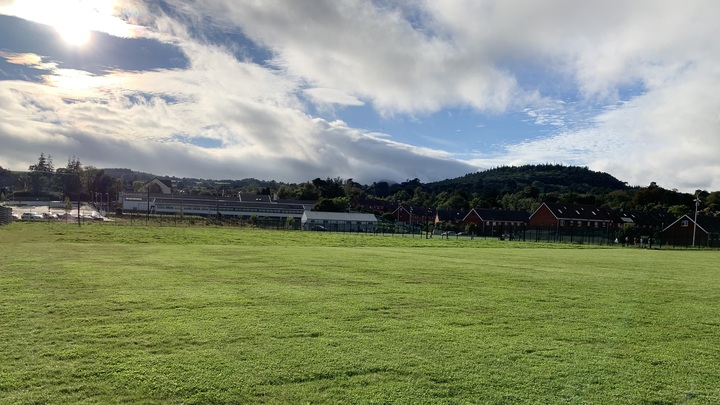 Act Now for a Safe Dr Ryan ParkIn recent months, anti-social behaviour in and around the park has been escalating, including bonfires, intimidation, litter and fireworks being aimed at people and property. Many residents and park users no longer feel safe, and parents are worried about their children using the park, particularly as Halloween approaches, when problems have been at their worst in previous years. In response, the Dr Ryan Community Group has been formed by Residents Associations and Neighbourhood Watch groups from neighbouring estates, along with St Laurence's National School and Sporting Greystones FC. We can't solve this alone. We're asking the Council, our local councillors and An Garda Síochána to work with us NOW, so that Dr Ryan Park stays a safe, welcoming space for everyone. Please sign and share to show your support.688 of 800 SignaturesCreated by Peter Baxter
 -
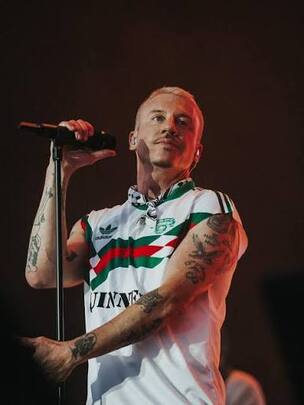 Make Macklemore Grand Marshal of Dublin's St. Patrick's Day Parade 2027We call on the Board of the National St. Patrick's Festival to name musician Ben Haggerty — known worldwide as Macklemore — as Grand Marshal of the 2027 St. Patrick's Day Parade in Dublin. Macklemore has spoken proudly and publicly about his Irish heritage, connecting his family's story to the broader story of the Irish diaspora. He has used his platform not just to celebrate that identity, but to live out values many in Ireland hold dear: solidarity with the oppressed and a willingness to speak plainly about injustice, even when it's unpopular. Since October 2023, Macklemore has been one of the most visible artists in the world willing to speak out on the suffering of Palestinians in Gaza and the West Bank. He released "Hind's Hall," donated proceeds to humanitarian relief, and has consistently used interviews and performances to draw attention to the human cost of the conflict — actions that cost him commercially and professionally at points in his career. Ireland has a long history of solidarity with Palestine, rooted in its own experience of colonisation and partition. Naming Macklemore as Grand Marshal would be a fitting way to honour an artist whose Irish-American identity and moral courage reflect values central to Irish identity itself: standing with the powerless against the powerful. We ask the Board to recognise this by naming Macklemore Grand Marshal of the 2027 Dublin St. Patrick's Day Parade.7 of 100 SignaturesCreated by Brendan Mac Miadhacháin
 -
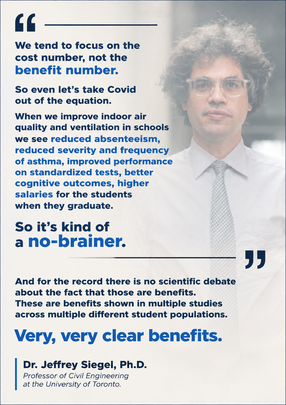 Protect Our Children: Clean Indoor Air and the Truth About Long COVIDChildren spend a huge proportion of their lives in classrooms. They should not have to breathe poorly ventilated, unfiltered, rebreathed air for six hours a day when practical solutions exist. COVID has not disappeared. Reinfections continue, and a proportion of children and adults (16% according HSE FADA report, 15-53% according to HIQA's review of international evidence, 16% according to Mass General Brigham study, 2026, 27% of healthcare workers according to NHS REACH-OUT study, 2026) develop Long COVID — sometimes with disabling symptoms. Due to the lack of information on long Covid in Ireland, much of this harm is going undiagnosed or is not attributed to the real cause, COVID-19 infection. The WHO, the CDC, the OECD and other international organizations continue to warn about Long COVID, including its impact on children, yet public awareness in Ireland remains remarkably low. Clean indoor air is one of the few interventions that can protect everyone without requiring individual behaviour. Good ventilation and appropriately sized HEPA filtration reduce exposure to airborne infectious particles while also helping to reduce pollutants, allergens and particulate matter. Other places are already acting. Schools in London, parts of the United States, Canada, Australia and elsewhere have introduced filtration, air-quality monitoring or wider clean-air programmes. Ireland announced €62 million for school ventilation improvements and HEPA filtration in December 2021, yet HEPA filtration is still not standard in Irish classrooms. This is also about the right to honest public-health information. Parents should be given clear, current information about airborne transmission, Long COVID, women and girls being at greater risk of Long COVID, reinfection and the potential longer-term consequences of infection so that they can make informed decisions for their families. The information vacuum on the reality of Long COVID and the huge burden it puts on the healthcare system is being filled by racist, antivax conspiracy theorists. Clean Indoor Air will save lives and improve the health and wellbeing of children today and for generations to come. The infrastructure we put in place now will protect pupils and teachers from COVID, influenza and many other airborne infections, while improving the everyday quality of the air they breathe. Ireland entered the pandemic with the 4th highest rate of asthma in the world with 1 in 5 children suffering and as an outlier in the EU with rising deaths from asthma. It is an abomination that the government decided against making HEPA filters standard in classrooms when faced with COVID-19, and we feel it is an insult to our intelligence and an exercise in gaslighting when politicians and media discuss issues such as "alarming rates of absenteeism" and "record breaking hospital overcrowding", while completely ignoring the reality of long COVID. We know how to make indoor air cleaner. We know how to reduce airborne transmission. Parents deserve accurate information about the risks. What is missing is the political will to act. Please join us in asking the Government to make clean air and honest public-health information a basic standard for every child in Ireland.26 of 100 SignaturesCreated by Parents For Clean Air —
-
 Taoiseach - Step up and act for children now on the climate emergency.Protecting our children from harm is the most basic responsibility and instinct of being a parent. The devastation we have seen across Europe this summer - thousands dying, including infants and young people, as a consequence of extreme heat; Irish tourists running for their lives from wildfires; children fainting and having seizures at school; nature and wildlife destroyed - is a sign of a fast worsening climate and biodiversity emergency which puts the future of all our kids and grandkids at risk. Instead of the emergency response we need to protect children from the worst of climate harms, their Government has been back-tracking on their obligations to them. There is so much more we can do to protect our kids and give them a better chance for their future. And children and young people need it to happen now. Please join with other parents, care-givers and grandparents, and call on Taoiseach Mícháel Martin to step up for kids and future generations as he promised, and take emergency action to help protect them and their future.829 of 1,000 SignaturesCreated by Louise O'Leary
-
 Give Sixmilebridge a Secondary SchoolSixmilebridge has the largest growing population base in Co. Clare and students finishing primary school face uncertainty about their education, applying to over-subscribed secondary schools in Shannon and Limerick. Our national school is one of the largest in Clare and given the current exceptional growth of the town, with hundreds of new houses being built, a school for the town is a matter of urgency. We need somewhere for our children to continue their education, locally. There is a long list of advantages to planning and building a secondary school in the town, not least of all: · Student wellbeing · Traffic reduction · Benefits to the environment, meeting local climate change targets · Local employment · Advantages for the local economy · Strengthening our community · The development of our town on the whole · Reducing the pressure on school and services in other towns like Shannon. Clare TDs have all come out to strongly support this petition. We need the Department of Education and Clare County Council to take action.835 of 1,000 SignaturesCreated by Maria Beville
-
New skatepark tullamore offalyOther people should join me in this campaigne because there has been many issues lately with the tullamore skate scene as the park is an unsafe place and the skatepark no longer feels like a fun place to learn to skate there is many skaters in tullamore and only one skatepark is no longer enough133 of 200 SignaturesCreated by Jack pidgeon
-
 Protect Choice and Continuity in Irish Maternity CareWe believe women should retain meaningful choice in how they receive care during pregnancy and birth, and that maternity care options should be enhanced, not restricted, by healthcare reforms. We fully support and strongly endorse major investment in the public maternity care system, and we want to see it developed to the highest possible standard, with meaningful choice across care pathways, including consultant-led care, midwifery-led care, and community-based care. However, this must be achieved by strengthening and expanding services, not by removing existing options, particularly where there is no adequate or appropriate alternative available to replace the current private care pathway. Thousands of pregnant women choose private maternity care for a range of personal reasons. For many, the key reason is the guarantee of continuity of care: having a chosen consultant care for them from the first antenatal appointment through to delivery and postnatal follow-up. This pathway is deeply significant because it provides: • Tailored, personalised care: Women with specific physical or emotional needs, including those with past traumatic experiences, require care that reflects and responds to their circumstances. • Trust and peace of mind: Being attended by a familiar consultant who understands a woman's history provides reassurance during what is often the most significant medical event of her life to date. Most women choose this care pathway and make financial sacrifices to do so because an equivalent level of care is not available to them within the public system. Not every woman chooses this option. But every woman should have the right to. Yet under current Sláintecare reforms, access to the private maternity care pathway is being phased out. Maternity care is disproportionately affected by Sláintecare policy, and women are the only group directly impacted in this way. Unlike other areas of healthcare, where private and public options exist side by side, maternity care in Ireland operates within the public hospital system, as there are no private maternity hospitals. Removing private care from public hospitals removes access to the private maternity care pathway entirely. This creates a clear structural inequity: choice is being reduced in a female-only area of healthcare, while private options remain available in other medical specialties. We call on the Government to maintain access to the private maternity care pathway within the maternity care system by refraining from removing private maternity care access within public maternity hospitals.7,860 of 8,000 SignaturesCreated by Our Maternity Choice
-
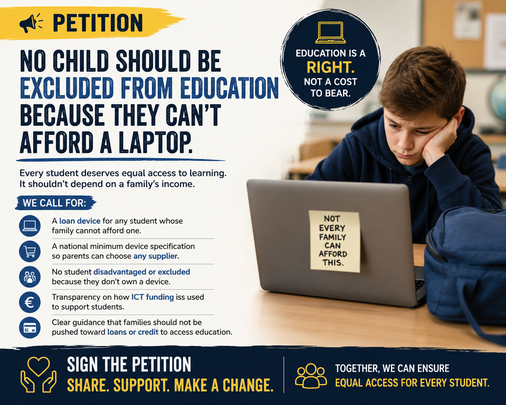 No Child Should Be Excluded From Education Because They Can’t Afford a LaptopThe Minister for Education has confirmed that there is no Department requirement for students to own a laptop and that schools should ensure no child is disadvantaged due to lack of access to technology. However, many families are being asked to spend hundreds of euro on specific devices, sometimes through single-supplier arrangements and third party financial institutions. The Department has also acknowledged concerns about the financial burden these schemes can place on families. As digital technology becomes increasingly important in education, national protections are needed to ensure affordability, choice and equal access for all students.69 of 100 SignaturesCreated by Keelin Brereton
 -
 Help parents of children reduce the pupil teacher ratio from 36:1 to 23:1 in Scoil Chualann BrayCalling all friends and families of Scoil Chualann, please sign the petition to request an appeal to Department of Education decision to reduce the number of permanent full time teachers in Scoil Chualann for Academic Year 2026- 2027. Scoil Chualann has been at the heart of education in Bray for generations building a proud tradition of academic excellence and cultural excellence. Scoil Chualann is a co-educational, all-Irish primary school (Gaelscoil) situated on Vevay Road in Bray, County Wicklow. Established in 1977 it is dedicated to providing Irish-medium education while nurturing Irish culture and heritage. A major milestone in its history occurred in the 1980s when a dedicated, permanent 8 classroom purpose built facility was opened to it's pupils. For the academic year 2026 & 2027, parents have been informed following the release of Dept of Education Circular 0025/2026 there will multi grade class for Rang 3 & Rang 4 with proposed class size of 36 pupils. This proposal has naturally raised many concerns for parents of children currently enrolled, which we outlined below: 1. A multi grade class of 36 children is 57% higher ratio than the recommended national ratio of 23 : 1 pupils to teacher ratio for primary school. 2. This local issue also highlights a national issue. According to the Department of Education, more than 43,000 Irish primary school pupils were in classes of 30 or more last year, while the average primary school class size remains at 22.5 pupils, which so happens to be the highest in the EU. Despite repeated commitments to reduce class sizes, many schools continue to operate overcrowded classrooms that place enormous pressure on children, teachers, and parents. 3. Gaelscoileanna operate through full immersion in Irish. Pupils are taught through Irish across all subjects, often with varying levels of fluency. Learning through Irish requires: additional classroom interaction, engagement and reinforcement to ensure children can fully access the curriculum confidently through the Irish language. Introducing new concepts, encouraging participation through Irish, supporting language development maintaining immersive classroom environments 4. Protect the long-term sustainability, accessibility and growth of Irish-medium education across Ireland and align staffing policy with the State’s commitments to strengthening the Irish language. (Action Plan for 2026-2028 launched in support of the National Plan for Irish Language Public Services 2024-2030) 5. It is about recognising that equal numerical formulas do not always create equal educational outcomes. If Ireland truly values the Irish language, then our schools must be properly supported to deliver it. 6. If the Department of Education genuinely wants to support and grow the Irish language, then our education system must actively support the schools and communities doing that work every day.Children learning through Irish should be encouraged and properly supported, not expected to succeed within increasingly stretched classroom environments that fail to recognise the additional educational demands involved.251 of 300 SignaturesCreated by Clíona Kerrigan
 -
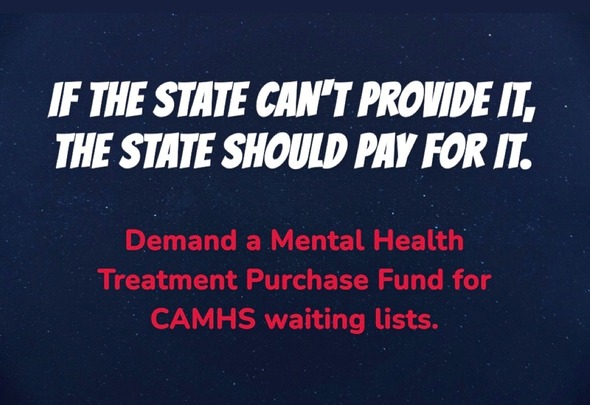 If the State Can’t Provide It, the State Should Pay for It.An Appointment, Not a Waiting List. This campaign is born out of my family's absolute worst nightmare. 19 months ago, we suffered the devastating, heart-breaking loss of my nephew to suicide. Today, we are living through the nightmare all over again. My niece has been diagnosed with ASD Level 1 and severe depression, yet she is currently stranded on a HSE CAMHS waiting list, denied the urgent care she needs. We know the terrifying cost of waiting. We are being pushed to the brink of crisis while the system stalls, and I refuse to sit by and watch the state fail another child. Right now, over 4,700 children across Ireland are stranded on HSE CAMHS (Child and Adolescent Mental Health Services) waiting lists. Hundreds of them have been waiting for more than a year. Behind these statistics are real families in despair. Parents are forced to watch their children’s mental health deteriorate day by day in a broken system. Early intervention is vital, but the HSE is tied up in recruitment bottlenecks and systemic delays. If a child is waiting too long for a physical surgery, the state steps in through the National Treatment Purchase Fund to pay for them to be seen privately. Mental health deserves the exact same urgency. We are demanding that the Minister for Health and the Minister for Mental Health establish a Mental Health Treatment Purchase Fund. Our demand is simple: If the HSE cannot provide a child with a CAMHS appointment within 3 months, the state must automatically fund alternative, accredited private or community-based therapies. Access to life-saving mental health care should be based on a child's medical need, not their parents' ability to pay hundreds of Euros in private fees. If the state cannot provide the public care in time, the state must pay for the alternative. Sign this petition to demand immediate funding relief for the thousands of children left behind by CAMHS. Our children cannot afford to wait.213 of 300 SignaturesCreated by Karen Roche
 -
 Tramore Childcare InfrastructureRaising a family in Tramore means facing an invisible wall when it comes to early years education and care. Parents are stuck on stagnant waiting lists, facing immense pressure, and frequently forced to delay returning to the workforce because our town's infrastructure has completely failed to keep pace with its growth. We love our community, but a thriving town cannot be built on housing developments alone; it requires functional, accessible public services. This campaign is a coordinated effort to get direct, actionable answers to the structural flaws stalling our town's childcare system. By joining us, you are adding your voice to five critical demands: • Pilot A State-Led Model • Housing Planning Enforcement • Fast-Tracked Capital Funding • Joined-Up Town Planning • Accessible Financial Subsidies Our children deserve the opportunity to learn and grow in their own locality, and parents deserve a system that works. Please sign this petition to support these targeted objectives, and join us at our public meeting on Thursday, June 11th, 2026, at 11:00 AM in the Coastguard Cultural Centre to present these demands directly to our elected representatives.430 of 500 SignaturesCreated by Carrie O'Hanlon
 -
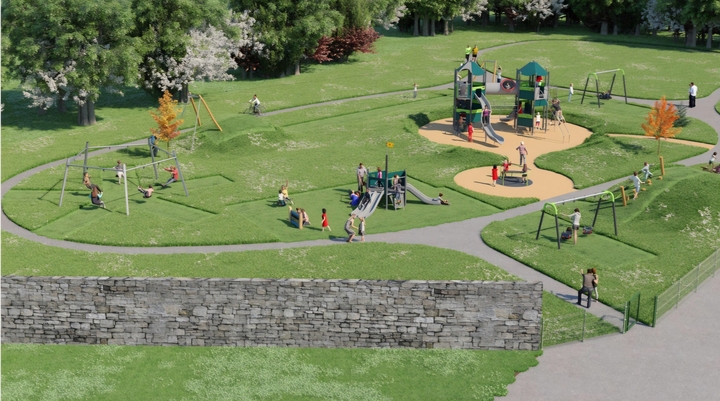 Let's Build Cloughjordan PlaygroundA local playground will: Provide a safe and welcoming space for children of all ages and abilities. Support physical and mental wellbeing through outdoor activity. Create a social hub where families can connect. Enhance the attractiveness and vibrancy of Cloughjordan village. Support local businesses by encouraging families to stay and spend locally.325 of 400 SignaturesCreated by Cloughjordan Playground Committee
Hello! We use cookies to save you time and show you more relevant campaigns. Need more information?